Ink manufacturer and distributor for 43 years

Printing Inks from Turkey: Types, Selection and Supply

Every printing ink a sheetfed offset shop uses on one page: conventional CMYK, UV and LED-UV, metallic and fluorescent, PANTONE and custom colours, low-migration series for food packaging. Which type suits which job, which brand makes which type, what to check when selecting and what drives the price. SIM Printing Supplies manufactures the EVA COLOR range in Istanbul and distributes SAKATA INX, Zeller+Gmelin and SCHLENK in Turkey, exporting with English documentation.

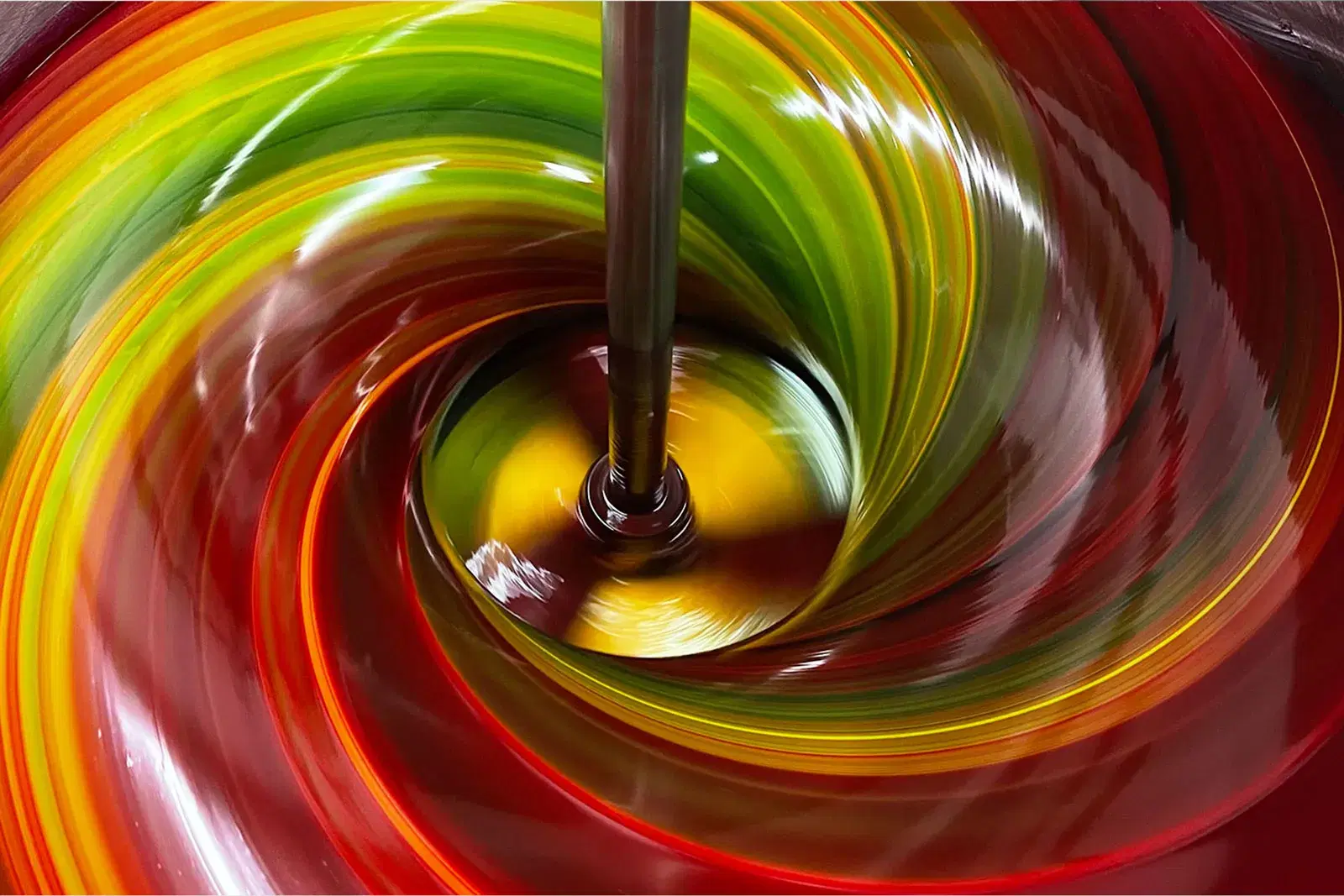
Offset ink being mixed in the SIM custom colour laboratory in Istanbul

Short answer

Printing inks are pigmented systems that carry colour from plate to paper and fall into six main types: conventional sheetfed offset (CMYK), UV/LED-UV, metallic, fluorescent, PANTONE/custom colour and low-migration inks for food packaging. Printing system, substrate and finishing decide the choice. SIM manufactures EVA COLOR metallic and fluorescent inks in Istanbul, is the Turkish distributor of SAKATA INX, Zeller+Gmelin and SCHLENK, and formulates custom colours in a 24/7 laboratory to a Delta E below 1.5, shipping across Turkey and to export markets.

Key facts
Ink typesConventional offset (CMYK), UV/LED-UV, metallic, fluorescent, PANTONE/custom, low migration
BrandsSAKATA INX (Japan, since 2002), Zeller+Gmelin (Germany), SCHLENK (Germany) distributorships · EVA COLOR (made by SIM)
StandardsISO 2846-1 CMYK; ICC support targeting ISO 12647-2; EuPIA; low-migration statements for food packaging
Custom colour24/7 laboratory, Delta E below 1.5, 1–3 working days after sample approval, minimum 5 kg, 15,000 kg per month
Lead timeSame day in Istanbul for stock (orders by 12:00), 1–2 working days across Turkey, export by road, sea or air (EXW, FOB, CIF)
DocumentsTDS and SDS in English on request; distributorship documents; measurement report

What is a printing ink and how does it work?

A printing ink is a paste made of pigment (the colour), a varnish–resin vehicle that carries the pigment and binds it to the surface, driers or photoinitiators that make it dry, and additives that tune its flow. Offset printing relies on ink and water repelling each other: the image area of the plate accepts ink, the non-image area accepts fountain solution; the ink moves to the blanket and from there to the paper. Tack, viscosity and water tolerance therefore have to match the press, the paper and the chemistry.

The drying mechanism separates the types. Conventional ink sets by absorption into the paper and hardens by oxidation; UV ink contains no solvent and cures in seconds under UV light; metallic and fluorescent inks carry special pigments and are sensitive to film thickness; PANTONE and custom colours are measured mixes of base colours; low-migration series are formulated to food-packaging regulation.

The right ink is neither the most expensive nor the cheapest but the one matched to the printing system, substrate, finishing and regulatory requirement. This hub brings together the six types, the brand × type matrix, a selection table and the price factors; for how ink relates to blankets, chemicals and varnish see the printing materials guide. SIM has supplied these inks to the Turkish printing industry for 43 years and exports the same range.

Types of printing ink

For each type we summarise what it is, when it is used and which brand SIM holds; product pages carry specifications and FAQs.

  1. 1Conventional sheetfed offset inks (CMYK)Oxidative-drying process sets for coated and uncoated paper; ISO 2846-1.
  2. 2UV and LED-UV offset inksCured in seconds under UV light; adhere to non-absorbent substrates.
  3. 3Metallic and gold inksGold/silver effect in one pass with bronze and aluminium pigments; made by EVA COLOR, SCHLENK pigments.
  4. 4Fluorescent (neon) inksPANTONE 801–814 neon references; EVA COLOR Fluorescent series made by SIM.
  5. 5PANTONE and custom colour inksPANTONE series from stock and custom colours from the 24/7 lab at Delta E below 1.5.
  6. 6Low-migration (food packaging) inksUV and conventional series meeting migration limits for food, toy and cosmetics packaging.
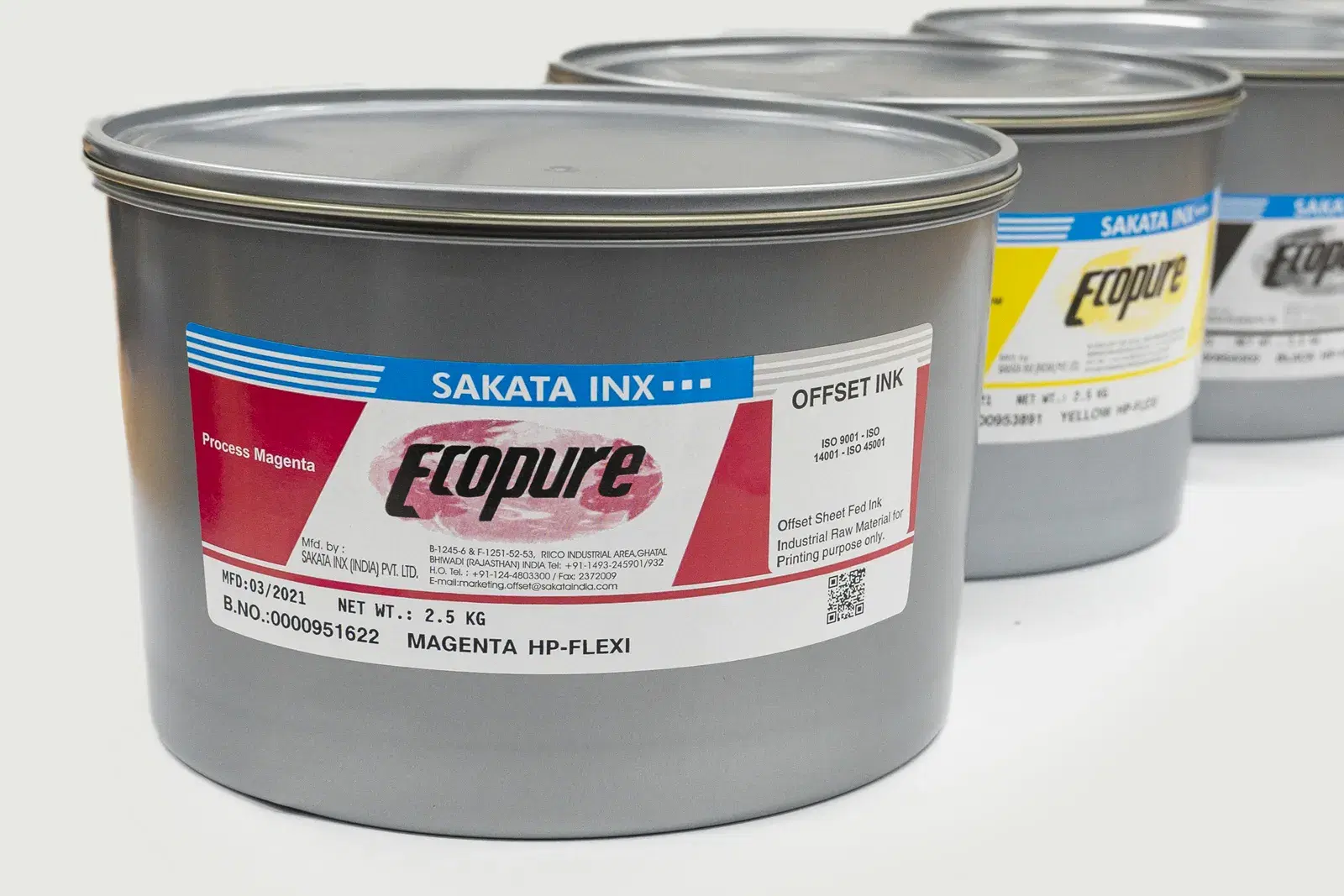
SAKATA INX Ecopure Magenta and Yellow sheetfed offset ink cans (2.5 kg)

Conventional sheetfed offset inks (CMYK)

A conventional offset ink consists of pigment, a vegetable- or mineral-oil based varnish, resins and driers. On contact with paper the solvent fraction is absorbed and the ink sets, then it hardens by oxidation; paper absorbency and fountain solution pH therefore govern drying speed. Process sets are formulated to ISO 2846-1 so that FOGRA/GRACoL workflows match proof to press.

SIM has been the Turkish distributor of Japanese SAKATA INX sheetfed offset inks since 2002: high pigment loading reaches target density with a thinner film, balanced tack prevents picking on fast presses, and fast-setting versions lower set-off risk on perfecting and varnished jobs. Standard sets ship from stock in Istanbul, with English TDS/SDS for export orders.

When to use: Commercial print, magazines, catalogues, books, brochures and folding cartons on paper and board; the highest-volume and most economical group.

Brands at SIM: SAKATA INXView product
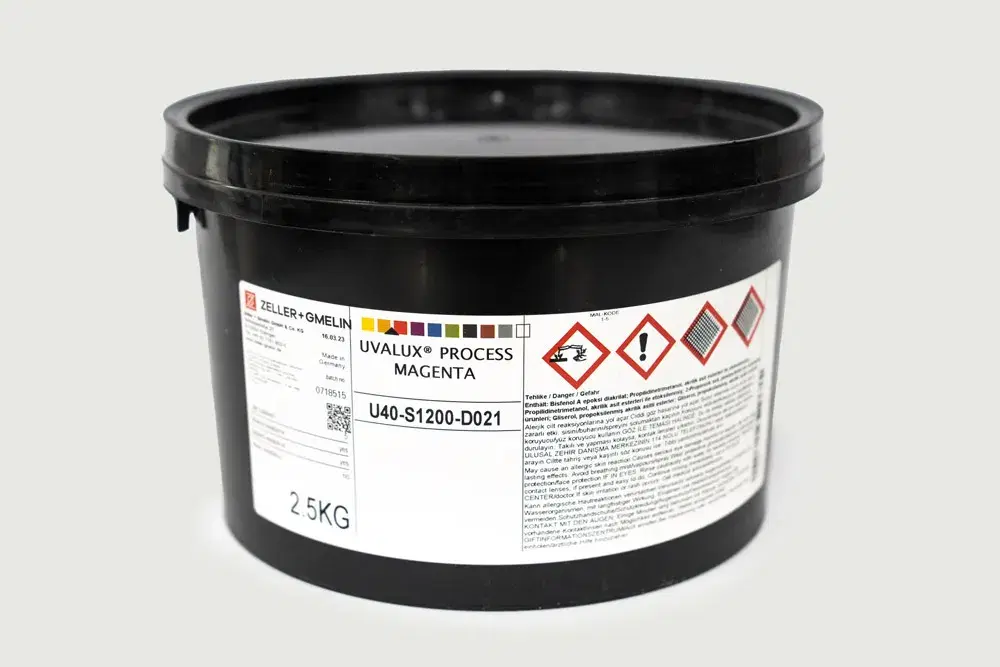
Zeller+Gmelin UVALUX Process Magenta UV offset ink (2.5 kg)

UV and LED-UV offset inks

UV inks contain no solvent; photoinitiators trigger polymerisation under the UV lamp and the ink cures in seconds. Cutting, lamination and dispatch can follow immediately, and the ink adheres to PVC, PP, PET and metallised surfaces where conventional ink cannot dry. LED-UV versions cure without heat and with lower energy use.

SIM is the Turkish distributor of German Zeller+Gmelin UV offset inks; the series is chosen by curing unit (conventional UV, LED-UV, H-UV) and substrate, with low-migration grades for food packaging. Converting a press to UV requires an EPDM blanket and UV-compatible rollers; our team runs curing tests at the press. See UV ink technology.

When to use: Plastics, metallised board and synthetic paper; labels and luxury packaging; same-day jobs; heat-sensitive substrates with LED-UV.

Brands at SIM: Zeller+GmelinView product
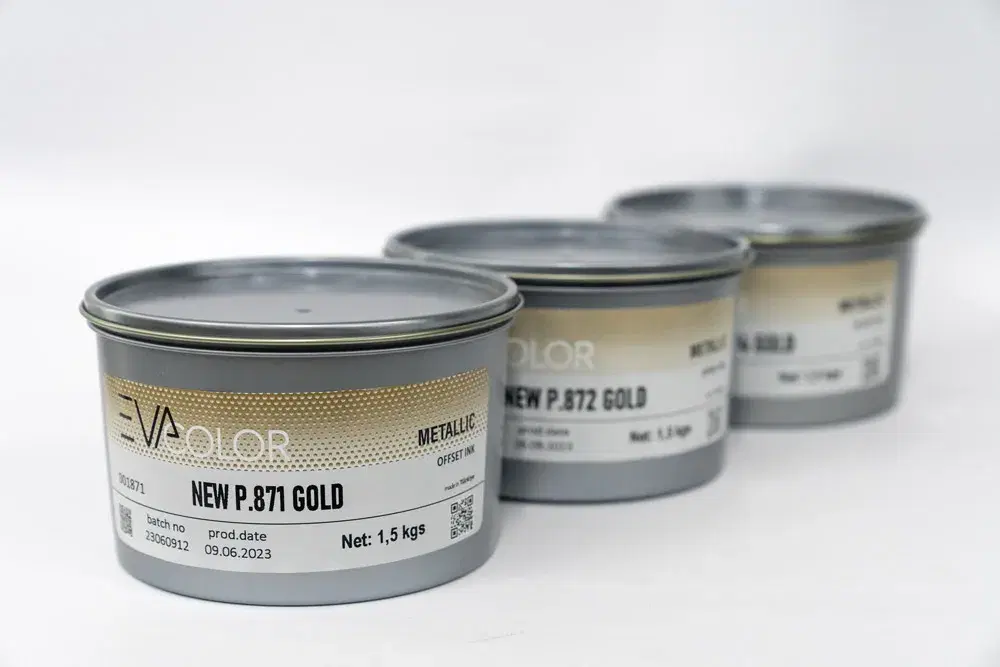
EVA COLOR NEW P.871 and P.872 Gold metallic offset ink cans (1.5 kg)

Metallic and gold inks

In a metallic ink, bronze (gold) or aluminium (silver) platelets align flat in the film and reflect light specularly; brilliance is measured as 60° gloss and reaches 85–95 GU on gloss-coated paper. The copper–zinc ratio sets the warmth of the gold; PANTONE 871–877 are the usual targets.

The EVA COLOR Gold and Silver series are manufactured by SIM in Istanbul, with SCHLENK pigments distributed from Germany. Production and press tips are in metallic ink production and metallic printing techniques.

When to use: Luxury packaging, beverage and cosmetics labels, invitations, certificates and covers; the economical alternative to hot-foil on medium runs.

Brands at SIM: EVA COLOR · SCHLENKView product
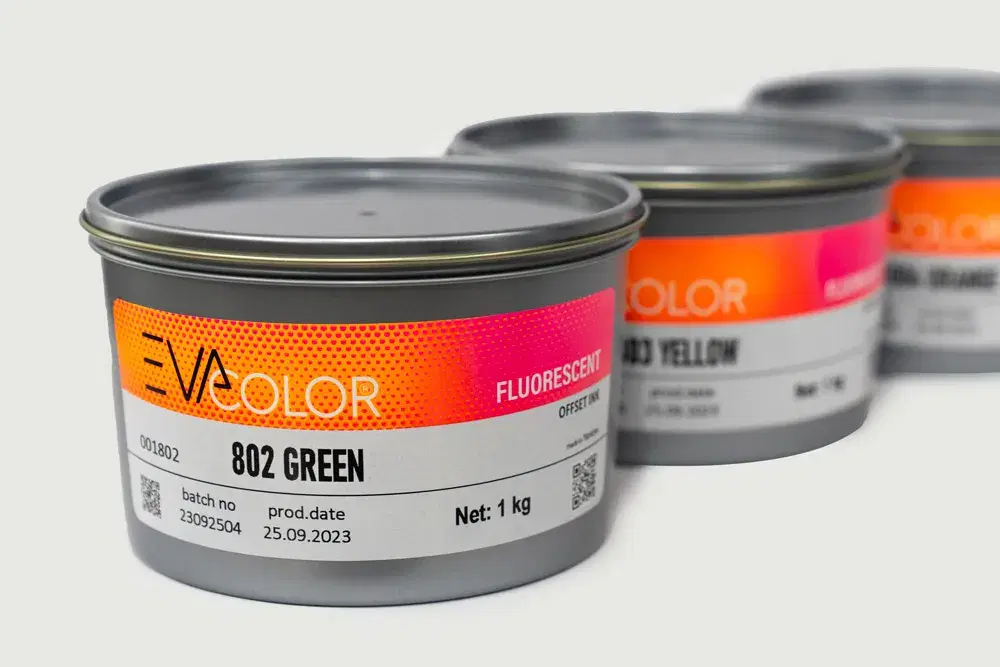
EVA COLOR 802 Green fluorescent offset ink series (1 kg cans)

Fluorescent (neon) inks

Fluorescent pigments absorb UV and visible light and re-emit it at longer wavelengths, so they look far more vivid than standard colours. They are sensitive to film thickness (a double hit may be needed) and have lower lightfastness; white gloss-coated paper gives the brightest result, and a UV-protective varnish is recommended outdoors.

The EVA COLOR Fluorescent series is manufactured by SIM to PANTONE 801–814 references; custom neon shades are formulated in the laboratory. Application details are in the fluorescent ink guide.

When to use: Promotional print, labels and price tags that must stand out, youth-oriented packaging and event materials.

Brands at SIM: EVA COLORView product
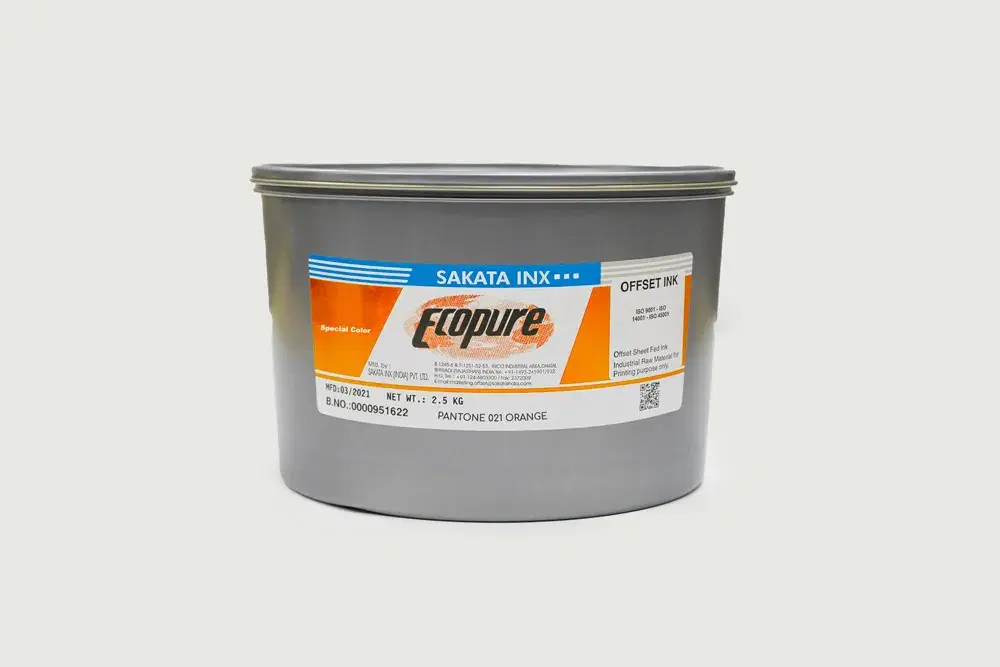
SAKATA INX Ecopure PANTONE 021 Orange spot colour offset ink

PANTONE and custom colour inks

PANTONE inks print brand colours that four-colour screening cannot reach, in one pass and consistently; each reference is a defined mix of base colours and looks different by paper type (C/U). Accuracy is proven as a spectrophotometer-measured Delta E.

SAKATA INX PANTONE series from stock; for shades not in stock or a brand colour, custom colour production in our 24/7 laboratory: a PANTONE code, sample or L*a*b* value is enough, target Delta E below 1.5, 1–3 working days after sample approval, minimum 5 kg, 15,000 kg monthly capacity. Recipes are archived for repeat export orders. The process is described in custom colour matching.

When to use: Logo and brand colours, packaging brand tones, vivid shades outside the CMYK gamut and fifth/sixth-unit printing.

Brands at SIM: SAKATA INX · EVA COLORView product
Zeller+Gmelin UVALUX Process Magenta UV offset ink (2.5 kg)

Low-migration (food packaging) inks

Low-migration inks are formulated so that their components do not migrate through the packaging into food beyond the limits of EU 1935/2004, 10/2011 and the Swiss Ordinance; they are documented with an EuPIA compliance statement and a migration certificate. Varnish and adhesive must be low-migration as well, not only the ink.

SIM supplies Zeller+Gmelin low-migration UV series and SAKATA INX conventional options suitable for food packaging, with documentation in English; our technical team recommends the right combination for the packaging structure. The regulatory and test framework is in safe inks for food packaging.

When to use: Primary and secondary food packaging, tea, coffee and confectionery cartons, pharma and cosmetics boxes; every job under EU 1935/2004.

Brands at SIM: Zeller+Gmelin · SAKATA INXView product

Brand × ink type matrix

Which brand do we stock or manufacture for which type? The matrix shows the right brand–type pairing before you request a quotation.

BrandCMYK offsetUV / LED-UVMetallicFluorescentPANTONE / customLow migration
SAKATA INXStock–––Stock seriesSuitable series
Zeller+Gmelin–Stock––UV custom colourLM-UV series
SCHLENK––Pigments and inks–––
EVA COLOR–UV metallic (on request)Manufactured (Gold, Silver)ManufacturedLaboratory production–

SAKATA INX: Japan, CMYK and PANTONE sheetfed offset. Zeller+Gmelin: Germany, UV and LED-UV. SCHLENK: Germany, metallic pigments. EVA COLOR: manufactured by SIM in Istanbul. Official distributorship documents for every brand on request.

Ink selection guide: decision table

Selection starts with press conditions. The table lists the options and our recommendation per criterion; the seven criteria in detail are in offset ink selection.

CriterionOptionsRecommendation
Paper / substrateCoated, uncoated, board, metallised, plasticPaper and board: conventional; metallised and plastic: UV/LED-UV; metallic brilliance drops on matte stock
PressConventional, UV, LED-UV, hybrid; sheetfed / webNo curing unit, no UV; on a hybrid press a separate roller and blanket set
Drying timeStandard, fast-setting, instant (UV)Same-day finishing: fast-setting or UV; set-off resistant series on perfectors
Colour targetCMYK (FOGRA/GRACoL), PANTONE, brand custom colourBrand colour: spot ink; CMYK simulation only on wide-tolerance jobs
Gloss and effectStandard, metallic, fluorescent, varnishGloss-coated plus protective varnish for metallics; white gloss-coated for fluorescents
FastnessRub, light, chemicalRub test on packaging and labels; lightfastness outdoors; chemical resistance in cosmetics
RegulationFood, toys, cosmeticsLow-migration series + EuPIA statement + migration certificate; varnish and adhesive compliant too
Run length and costShort, medium, longConsumption per thousand sheets, not price per kilogram; lot consistency and a stock agreement on long runs

Manufacturer or distributor? SIM is both

The two roles complement each other. As a manufacturer we produce EVA COLOR metallic, fluorescent and custom colour offset inks at our plant in Istanbul: a 24/7 laboratory, 15,000 kg monthly custom colour capacity, a recipe archive and spectrophotometric control. As a distributor we are the official Turkish partner of SAKATA INX (CMYK and PANTONE), Zeller+Gmelin (UV) and SCHLENK (metallic pigments); the standard series of these brands are stocked in our Beylikdüzü warehouse.

For a customer this means proven imported series from stock the same day for standard work, and a manufacturer's flexibility for brand colours and effects within days from the laboratory, with the same technical team at the press in both cases. For export customers it means one supplier for Japanese, German and Turkish-made inks in one consolidated shipment with English documentation. The matrix above shows which brand covers which type; the company history and documents are on the About page.

  • Manufacturing

    EVA COLOR metallic, fluorescent, custom colour

  • Distributorships

    SAKATA INX (2002), Zeller+Gmelin, SCHLENK

  • Laboratory

    24/7, 15,000 kg per month, Delta E below 1.5

  • Founded

    1983, Istanbul

What drives printing ink prices

Ink prices are not a single list figure; within one type, raw material, brand, packaging and technical requirement create a wide range. Compare quotations on cost per thousand sheets, not price per kilogram.

  1. 1

    Pigment and raw material

    Metallic bronze/aluminium, fluorescent pigments and UV photoinitiators multiply cost against CMYK; higher pigment loading raises the price per kilogram but lowers consumption.

  2. 2

    Type and drying system

    UV and LED-UV series cost more than conventional; in return drying wait and powder consumption disappear.

  3. 3

    Brand and origin

    Japanese and German imported series and SIM-made EVA COLOR sit at different price–performance points; both come with the same documentation.

  4. 4

    Packaging and quantity

    1 kg and 2.5 kg cans and 20 kg drums lower the unit price; annual contract pricing for recurring orders.

  5. 5

    Custom colour formulation

    Laboratory time and sampling; minimum 5 kg; repeat orders cost less because the recipe is archived.

  6. 6

    Regulation and documents

    Low migration, certificates and test reports add formulation and documentation work.

  7. 7

    Export logistics

    Incoterms (EXW, FOB, CIF), consolidation of several items into one shipment and transport classification for sea or air freight define the landed cost.

Technical support and colour matching

Ink selection is confirmed at the press: our technicians accompany the trial, measure density and dot gain and check ink–water balance and drying. For colour matching a PANTONE code, a printed sample or an L*a*b* value is enough; the laboratory targets a Delta E below 1.5 with a spectrophotometer and archives the recipe. For international customers we match remotely from L*a*b* readings and ship an approved sample before production. TDS and SDS are supplied in English and Turkish.

Printing inks: frequently asked questions

How many types of printing ink are there?
Six main types: conventional sheetfed offset (CMYK), UV and LED-UV, metallic, fluorescent, PANTONE and custom colour, and low-migration inks for food packaging. Web offset (heatset/coldset) and flexo inks belong to other printing systems; this page covers sheetfed offset inks.
What is the difference between offset ink and UV ink?
Conventional offset ink sets by absorption into the paper and dries by oxidation within hours; UV ink contains no solvent, cures in seconds under a UV lamp and adheres to non-absorbent surfaces such as plastics and metallised board. A UV system needs its own blanket, rollers and wash chemicals; the two cannot be mixed.
Which printing ink brand is good?
A good brand supplies the type your job needs with documents (TDS, SDS, ISO 2846-1 statement) and guarantees lot consistency. At SIM: SAKATA INX for CMYK and PANTONE, Zeller+Gmelin for UV, SCHLENK for metallic pigments, EVA COLOR for metallic and fluorescent manufacturing; the brand × type matrix shows which brand covers what.
How are printing ink prices determined?
Pigment and raw material, type and drying system, brand and origin, packaging and quantity, custom colour formulation, regulatory documents and, for export, Incoterms and freight. Compare on consumption and waste per thousand sheets rather than price per kilogram; we quote within one working day from press, paper and job details.
Can a PANTONE colour be printed with CMYK?
In-gamut colours can be approximated, but vivid orange, green, purple, pastel and metallic shades stay at Delta E 2–5 and may vary from run to run. For brand colours a spot PANTONE ink or a laboratory-made custom colour is recommended.
How fast is a custom colour ink and what is the minimum?
The laboratory runs 24/7; the formula is built from a PANTONE code, sample or L*a*b* value and delivered 1–3 working days after sample approval. Minimum custom order 5 kg, monthly capacity 15,000 kg; recipes are archived for repeat orders.
Which ink is needed for food packaging?
A low-migration (LM) UV or conventional ink with an EuPIA compliance statement and a migration certificate under EU 1935/2004, 10/2011 and the Swiss Ordinance. Varnish and adhesive must be low-migration as well, verified with a test report for the application.
How should ink be stored and what is its shelf life?
In sealed original packaging, away from direct sunlight, in a cool and dry place; in an opened can an anti-skinning spray or a foil under the lid prevents skinning. Shelf life is stated per product on the TDS; metallic cans must be closed tightly and silver inks kept away from iron tools.
Do you export printing inks, and on what terms?
Yes. We ship to the Middle East, Central Asia and the Balkans and other markets on request, by road, sea and air, on EXW, FOB or CIF terms. English TDS/SDS, certificates of origin and analysis and transport classification are prepared with the quotation; several items can be consolidated into one shipment.
How fast is delivery within Turkey?
From the Beylikdüzü warehouse, stock items ordered by 12:00 are delivered the same day in Istanbul and within 1–2 working days across Turkey; warehouse pickup is also available.
Request a quotation for printing inks

Tell us your press, paper and job; we recommend the right type and brand within one working day and start with samples and TDS, in English.