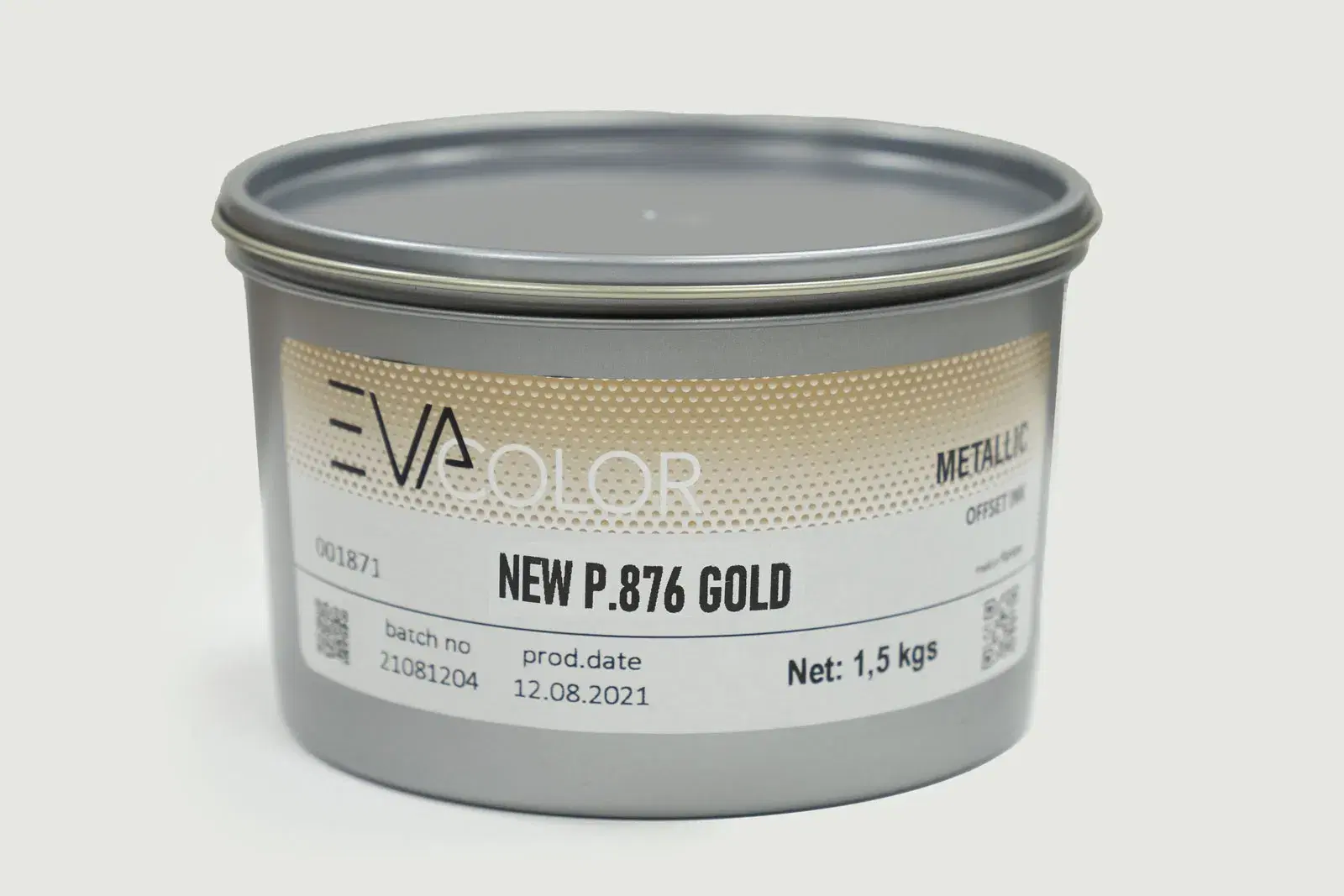
Metallic printing is one of the most powerful visual tools available to print buyers seeking to convey luxury, authority, and premium positioning. Gold and silver effects command attention on retail shelves and in the hands of recipients — research consistently shows that metallic packaging elements can increase shelf sales by 15–25% compared to equivalent non-metallic designs. But how are these effects achieved in offset printing? What are the trade-offs between offset metallic ink, hot foil stamping, and cold foil transfer? And how do the PANTONE 871-876 metallic tone series, EVA COLOR Gold and Silver formulations, and substrate selection interact to determine the final result? Drawing on over 40 years of printing materials expertise, this guide provides the technical answers. On the ink side see the EVA COLOR Gold and EVA COLOR Silver series, and the place of metallics among all groups in our printing materials guide.
01The Physics of Metallic Printing: Why Metals Shine
Standard printing inks reflect light diffusely — a property that creates the flat, matte appearance of conventional print. Metallic pigments work differently: ultra-thin metal platelets (bronze or aluminium alloy) orient horizontally within the ink vehicle and reflect incident light specularly (mirror-like), rather than scattering it in all directions. This specular reflection is the physical origin of the metallic sheen the human eye perceives. The key parameter for metallic brightness is not L* colour value but specular gloss measured at 60°, expressed in Gloss Units (GU). High-quality offset metallic ink on coated paper achieves 85–95 GU. EVA COLOR Gold, formulated with SCHLENK bronze pigments, consistently delivers within this range. Bronze pigment composition determines the gold tone: high zinc content (20–30%) yields a lighter, silver-leaning gold; high copper content (80–85%) produces a warmer, reddish-bronze tone. Silver metallic inks use aluminium platelets, which are highly sensitive to iron contamination — dedicated application equipment is essential.
02Three Gold Printing Methods Compared
Offset metallic ink is the most economical and integrated method: metallic colour is produced within the standard offset press run alongside other colours, requiring no separate equipment or post-press operation. Visual effect ranges from 85–95 GU on coated stock — not as brilliant as hot foil, but superior for large metallic areas, gradients, and metallic colour combinations (rose gold, green-gold etc.). Hot foil stamping (foil embossing) delivers the highest metallic brilliance — 150–300 GU — through the application of metal foil onto the substrate using heat and pressure. Edge sharpness is superior for fine lines, small type, and precise logos. However, a separate hot foil press and individual dies are required, making this the highest-cost option with longer make-ready time. Cold foil transfer applies adhesive in an inline press unit, then transfers metal foil to adhesive areas. Cost and flexibility fall between the other two methods; inline integration with offset presses is a significant operational advantage. Visual quality approaches hot foil but with slightly less edge sharpness.
Method comparison at a glance — Offset metallic ink: most economical, best for gradients and large areas, 85–95 GU. Hot foil stamping: highest brilliance (150–300 GU), best for fine detail, highest cost. Cold foil: intermediate cost, inline press integration, near-foil visual quality. Select by project type and budget.
03PANTONE 871-876 Metallic Series: Reference Guide
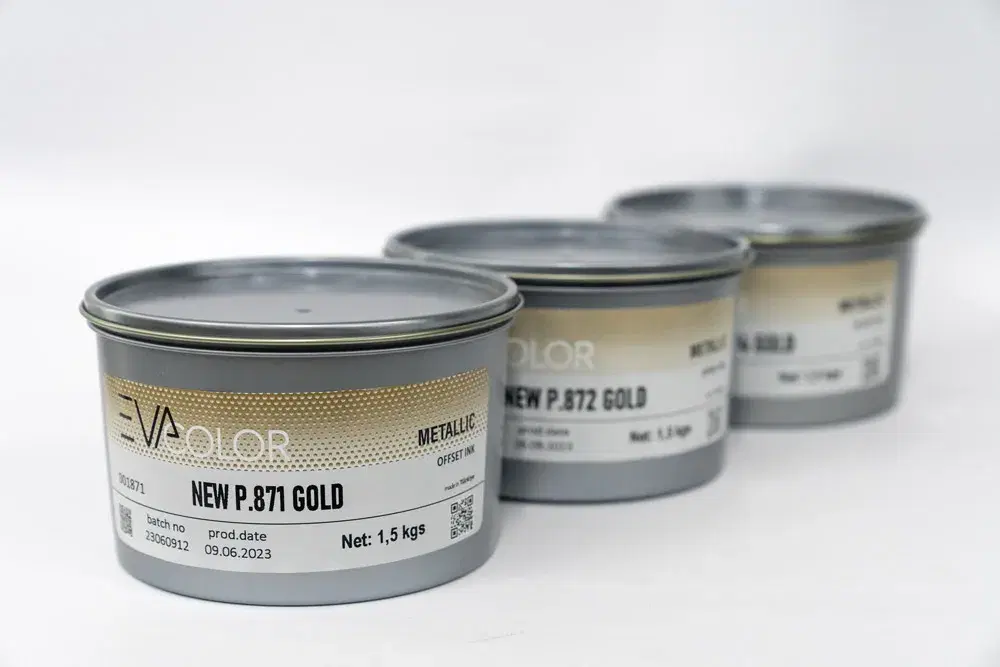
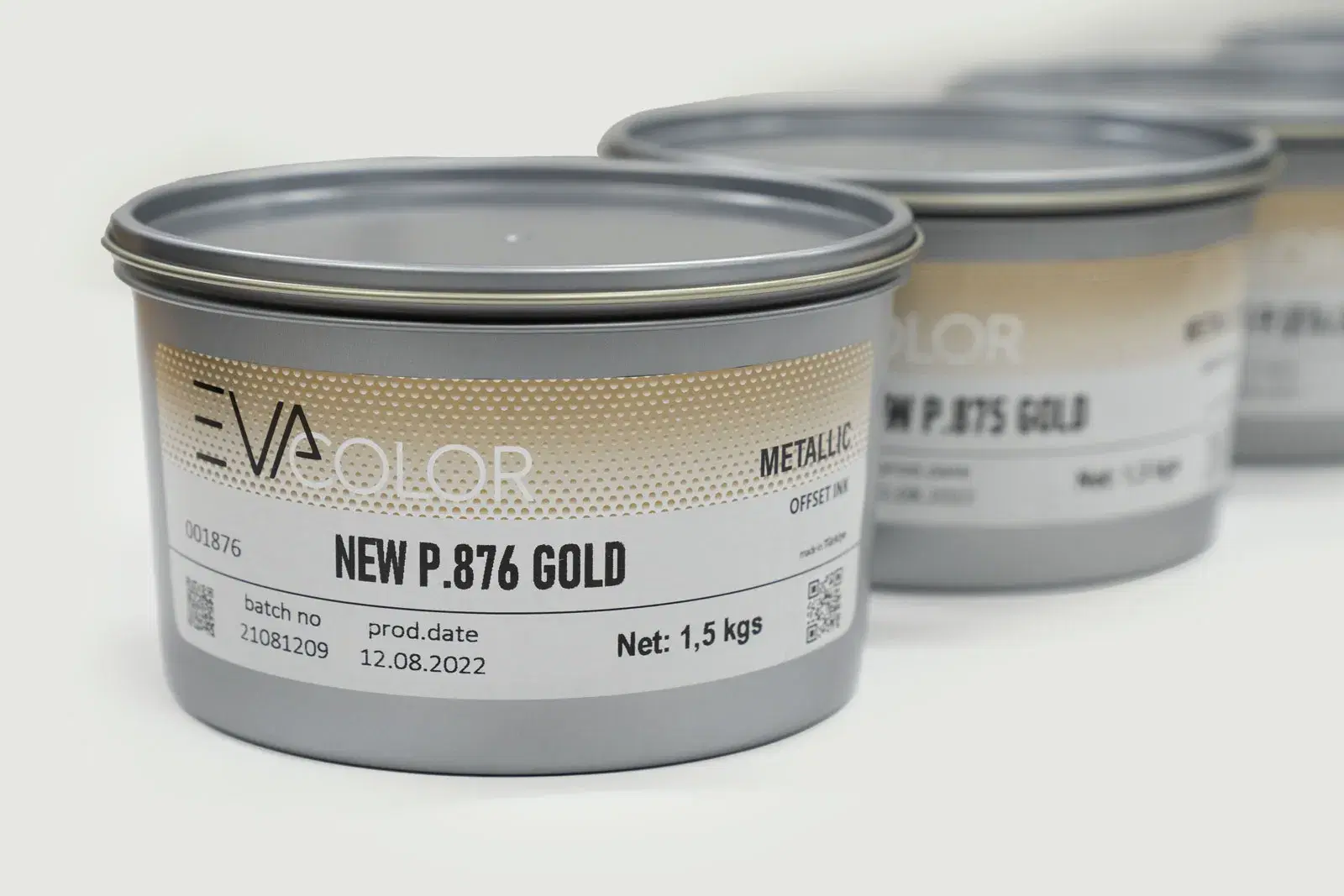
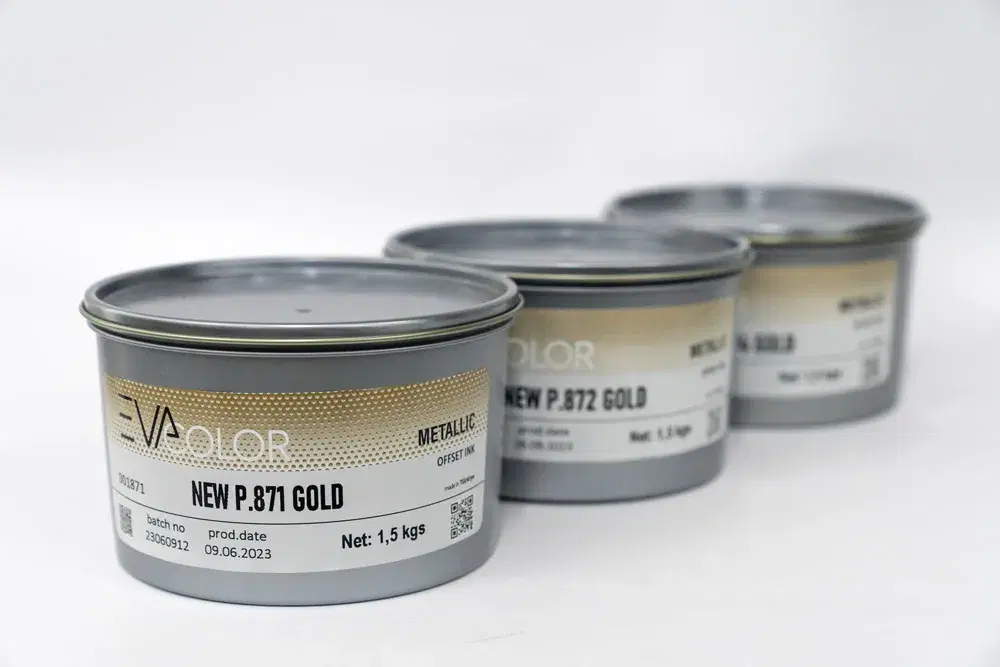
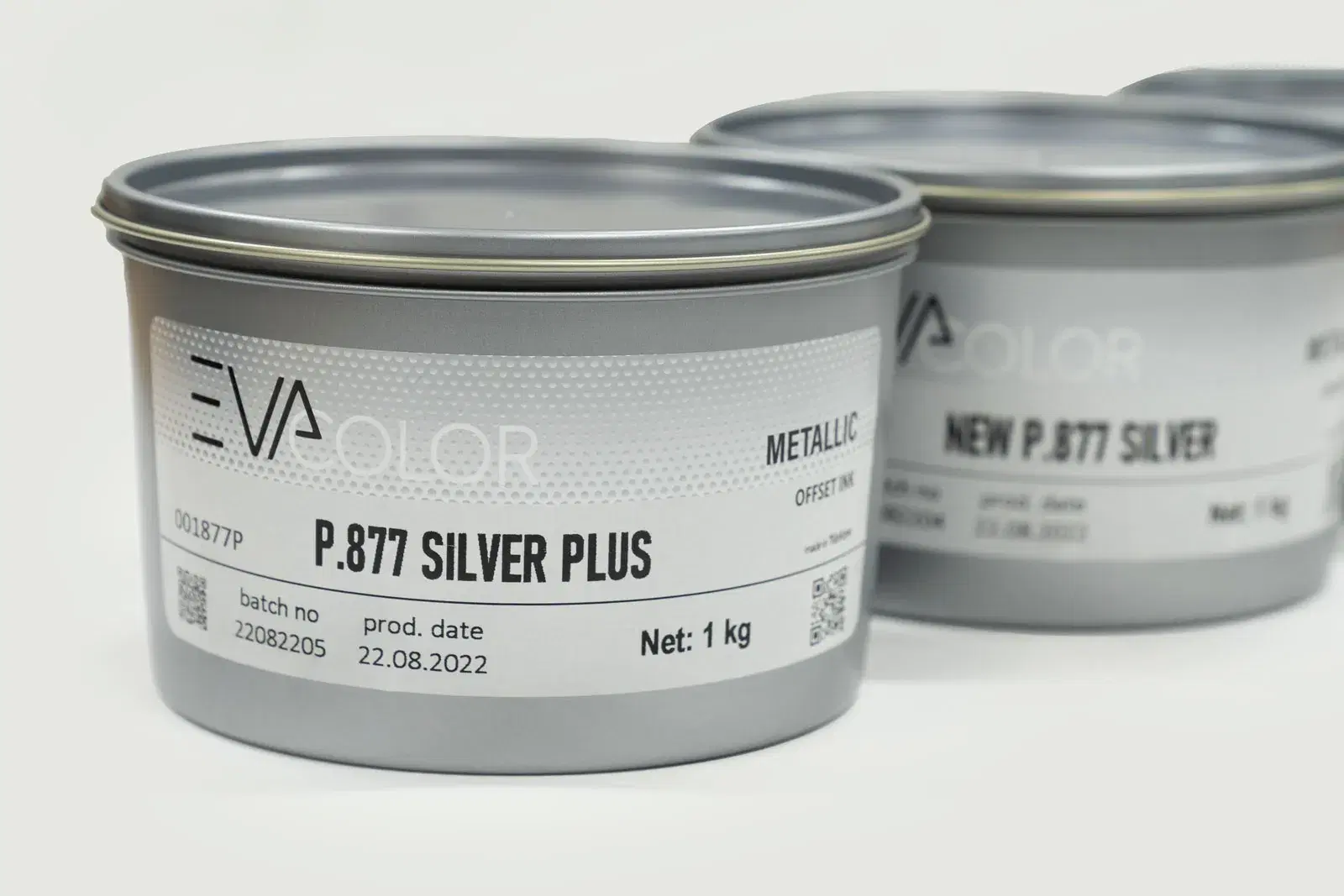
Pantone has dedicated the 871-877 number range to metallic offset inks. Each tone in this series corresponds to a different bronze alloy composition delivering a distinct gold-to-bronze visual character. Pantone 871 C is the lightest gold, a pale yellow-gold suitable for stationery and corporate identity. Pantone 872 C and 873 C are medium-intensity gold tones widely used in cosmetics and personal care packaging. Pantone 874 C is the warm, bright gold standard most commonly specified for luxury packaging, jewellery boxes, and invitations. Pantone 875 C and 876 C are darker, bronze-leaning tones preferred in premium wine labels, award plaques, and corporate gifts. Pantone 877 C is the silver metallic standard — aluminium-based and the most universally specified metallic tone across all print sectors. Critical note: none of these metallic Pantone tones can be produced with CMYK process colour. Metallic sheen requires genuine metallic pigment spot inks. EVA COLOR Gold covers the full Pantone 871–876 range; custom Pantone metallic matching is available from SIM's colour production laboratory within 4–8 hours.
04EVA COLOR Gold and Silver: Technical Overview
EVA COLOR Gold and Silver inks are formulated with SCHLENK metallic pigments — the German pigment specialist established in 1879, recognized globally as the leading producer of bronze and aluminium pigments optimized for offset printing. SCHLENK platelet geometry is specifically designed to maximize specular reflection while maintaining press transfer stability. EVA COLOR Gold series delivers 85–95 GU on high-gloss coated stock; the full Pantone 871–876 tone range is covered. Custom metallic tones outside the standard range can be produced by SIM's special colour laboratory at a minimum batch of 5 kg. EVA COLOR Silver is aluminium-based and matched to Pantone 877 C; dedicated storage and application equipment (no iron cross-contamination) is essential. Both series are formulated for standard offset press rheology — no special viscosity adjustment required.
05Paper Selection for Metallic Printing
Paper surface is the single most important substrate factor in metallic ink printing. Metallic platelet alignment on the surface — the mechanism that creates specular reflection — requires the smoothest possible substrate. Parker Print Surf (PPS) roughness value is the key reference: PPS < 0.7 µm (high-gloss coated) → 85–95 GU metallic brilliance; PPS 0.7–1.5 µm (matt coated) → 50–70 GU; PPS > 2.0 µm (uncoated/bond) → 20–40 GU. The visual difference between coated and uncoated is dramatic — approximately 75% brightness reduction on uncoated paper. Always specify coated paper (C2S, 150 g/m² or heavier) for metallic printing. Papers with optical brightening agents (OBAs) provide additional synergy with metallic inks, enhancing perceived brilliance.
06Varnish and Coating Compatibility
The choice of overcoat for metallic work can either multiply the visual impact or destroy it. High-gloss UV lacquer over metallic ink creates a synergistic doubling of brilliance — the lacquer surface gloss combines with metallic specular reflection to produce deep, jewel-like luminosity; 100+ GU surface values are achievable with EVA COLOR Gold and high-gloss UV lacquer. Matt lacquer over metallic ink significantly suppresses metallic sheen — matt coats diffuse the specular reflection created by the metal platelets. In some designs this contrast is deliberate: full-sheet matt lacquer followed by selective spot UV gloss over metallic elements creates striking visual contrast. Water-based dispersion varnishes (Hi-Tech Coatings series) are generally compatible with EVA COLOR Gold and Silver; ensure metallic ink is fully dry before lacquer application to avoid platelet entanglement and gloss loss.
07Frequently Asked Questions
What is the visual difference between offset metallic ink and hot foil? On coated stock, offset metallic ink delivers approximately 85–95 GU; hot foil stamping achieves 150–300 GU — approximately 2–3× brighter with sharper edges. For gradients, large metallic coverage areas, and multi-colour metallic combinations, offset metallic ink is superior. For fine lines, small type, and maximum brilliance on logotypes, hot foil is the premium choice.
Is EVA COLOR Gold compatible with UV printing systems? Standard EVA COLOR Gold is formulated for conventional oxidative-drying offset presses. UV printing systems require UV-cure metallic formulations — SIM distributes the Zeller+Gmelin UV metallic ink range for UV offset environments. Using conventional metallic inks in a UV press system will result in curing failures.
What is the minimum order quantity for custom Pantone metallic matching? The minimum production batch for custom Pantone metallic tones from SIM's colour laboratory is 5 kg — economical for small and medium print runs. Standard EVA COLOR Gold and Silver stock items have no minimum order restriction. Same-day and 4–8 hour delivery options are available. With over 40 years of EVA COLOR brand expertise and our SCHLENK pigment partnership, SIM Printing Supplies continues to deliver metallic ink excellence to Turkey's print industry.
Gallery
Frequently Asked Questions
- Can gold and silver metallic colors be printed with CMYK?
- No. CMYK mixing cannot replicate metallic brilliance. Gold and silver printing requires dedicated metallic inks containing aluminum or bronze pigments — such as EVA COLOR Gold/Silver or the PANTONE 871-877 series.
- Which paper type gives the best brilliance with metallic inks?
- Glossy coated paper delivers the highest metallic brilliance (85-95 gloss units). Matte coated paper significantly reduces the metallic effect. A UV varnish application can push gloss above 100 units.
- What is the difference between Pantone 871-876 and EVA COLOR Gold?
- Pantone 871-876 defines international standard gold shades (from light gold to dark bronze). EVA COLOR Gold is a ready-to-use metallic offset ink formulated to match these standards. SIM supplies both options from stock.
Related Products
SIM Baskı Malzemeleri
Get a Custom Quote for Your Project
Contact us for information about our wide product range and custom color production.