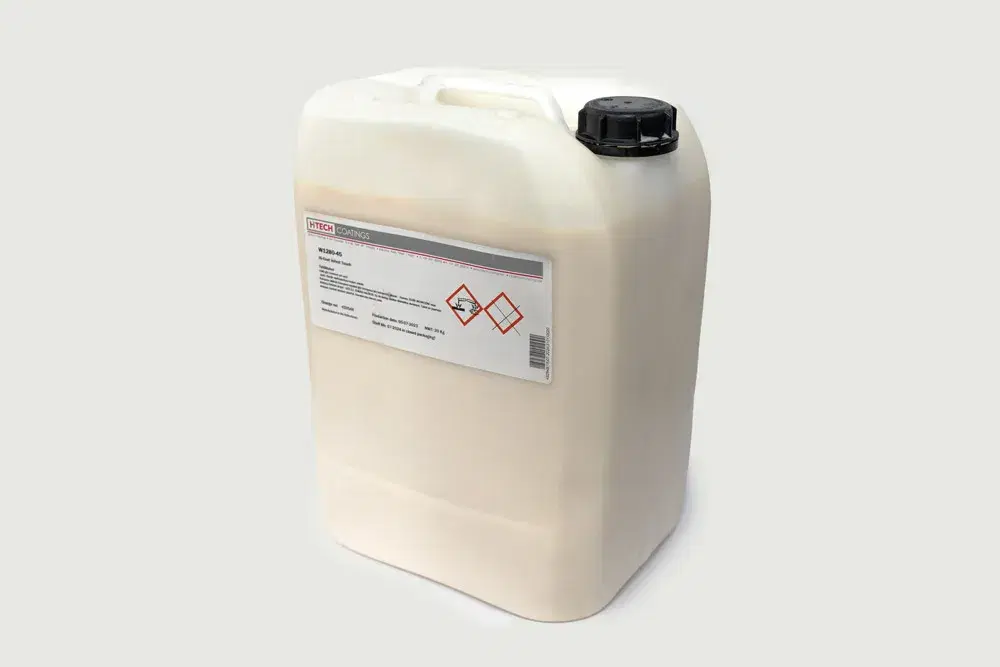
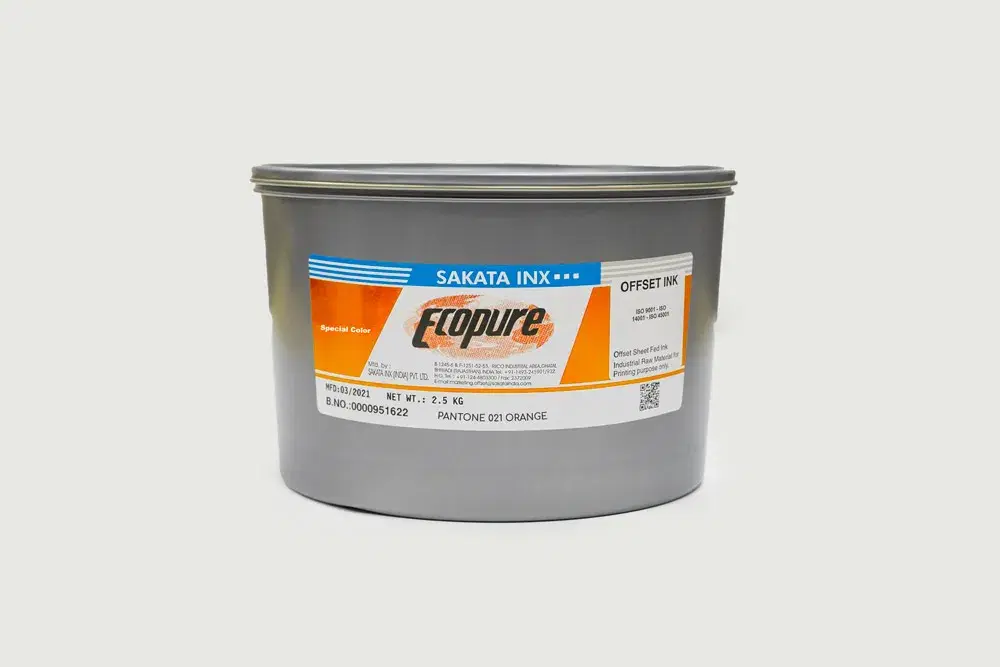
Ink drying problems are among the most common challenges in offset printing, directly affecting production efficiency and print quality. With over 40 years of industry experience at SIM Printing Supplies, we have observed that most drying issues — set-off, insufficient curing, and chalking — can be prevented with the right ink selection and technical adjustments. This comprehensive guide covers the technical causes of offset printing ink drying problems and 10 practical solutions based on our extensive experience. See our printing chemicals guide for the first thing to check in drying problems, the fast-setting SAKATA INX CMYK series and the printing materials guide.
01Ink Drying Mechanisms in Offset Printing
Offset printing ink drying occurs through multiple physicochemical mechanisms working together. The three fundamental drying mechanisms are: oxidative polymerization — chemical drying through oxidation of ink components in contact with air, completing in 6-12 hours with quality inks like SAKATA INX; absorption drying — mechanical drying through ink absorption into paper fibers, particularly on uncoated papers; and penetration drying — the initial setting phase through diffusion of ink vehicle into paper. ISO 2846-1 standard defines the drying properties of offset inks, and certified manufacturers test according to this standard.
Key factors affecting ink drying speed: ambient temperature, humidity, ink film thickness, paper type, and ink formulation. Drying speed increases by approximately 20-30% for every 10°C temperature rise.
02Set-Off Problem: Causes and Solutions
Set-off occurs when freshly printed wet ink transfers to the back of the sheet above it in the delivery pile. This is particularly common in high-volume printing with dense coverage. Key causes include excessive ink film thickness (ideal: 1-3 µm), insufficient tack value, high-speed delivery and stacking, ambient humidity above 60%, and ink-substrate incompatibility. ISO 2846-3 tests measure tack values on a 0-20 scale; higher tack increases set-off risk.
03Insufficient Drying and Chalking Problems
Insufficient drying occurs when ink fails to harden adequately after printing, causing ink to smear when touched and adhesion problems after varnishing or lamination. Main causes include low ambient temperature (ideal: 20-24°C), high humidity (ideal: 40-60%), incompatible paper-ink combination, and incorrect ink formulation. Chalking occurs when ink cannot bind adequately to the paper — particularly on highly absorbent papers where the ink vehicle is over-absorbed, leaving pigment without binder. The solution is to use inks with higher vehicle content or apply overprint varnish.
0410 Practical Solutions for Ink Drying Problems
1. Control Environment Conditions: Maintain print room temperature at 20-24°C and humidity at 40-60%. Each 5°C temperature drop extends drying time by approximately 25%. 2. Optimize Ink Film Thickness: Ideal offset ink film thickness is 1-3 µm; monitor regularly with a densitometer. 3. Check Paper-Ink Compatibility: Different paper types have different absorption properties; choose SAKATA INX CMYK series formulations optimized for specific papers. 4. Balance Dampening Solution pH: Ideal pH is 4.8-5.5; too acidic (pH < 4.5) slows drying, too alkaline causes emulsification issues. 5. Correctly Dose Drying Additives: Cobalt and manganese driers accelerate oxidative drying, but excessive use (>3%) negatively affects viscosity. 6. Optimize Tack Value: For high-speed machines, prefer lower tack inks adjusted to printing speed. 7. Use Anti-Set-Off Spray: For long runs and heavy coverage jobs, apply minimum amounts of anti-set-off spray. 8. Optimize Ink Zoning: Reduce ink flow in heavy coverage areas using zone-by-zone adjustments. 9. Use ISO-Certified Quality Inks: ISO 2846-1 certified inks have guaranteed and tested drying properties. 10. Perform Regular Maintenance: Aged ink on rollers negatively affects fresh ink drying; thorough post-print cleaning is essential.
05Impact of Ink Selection on Drying Quality
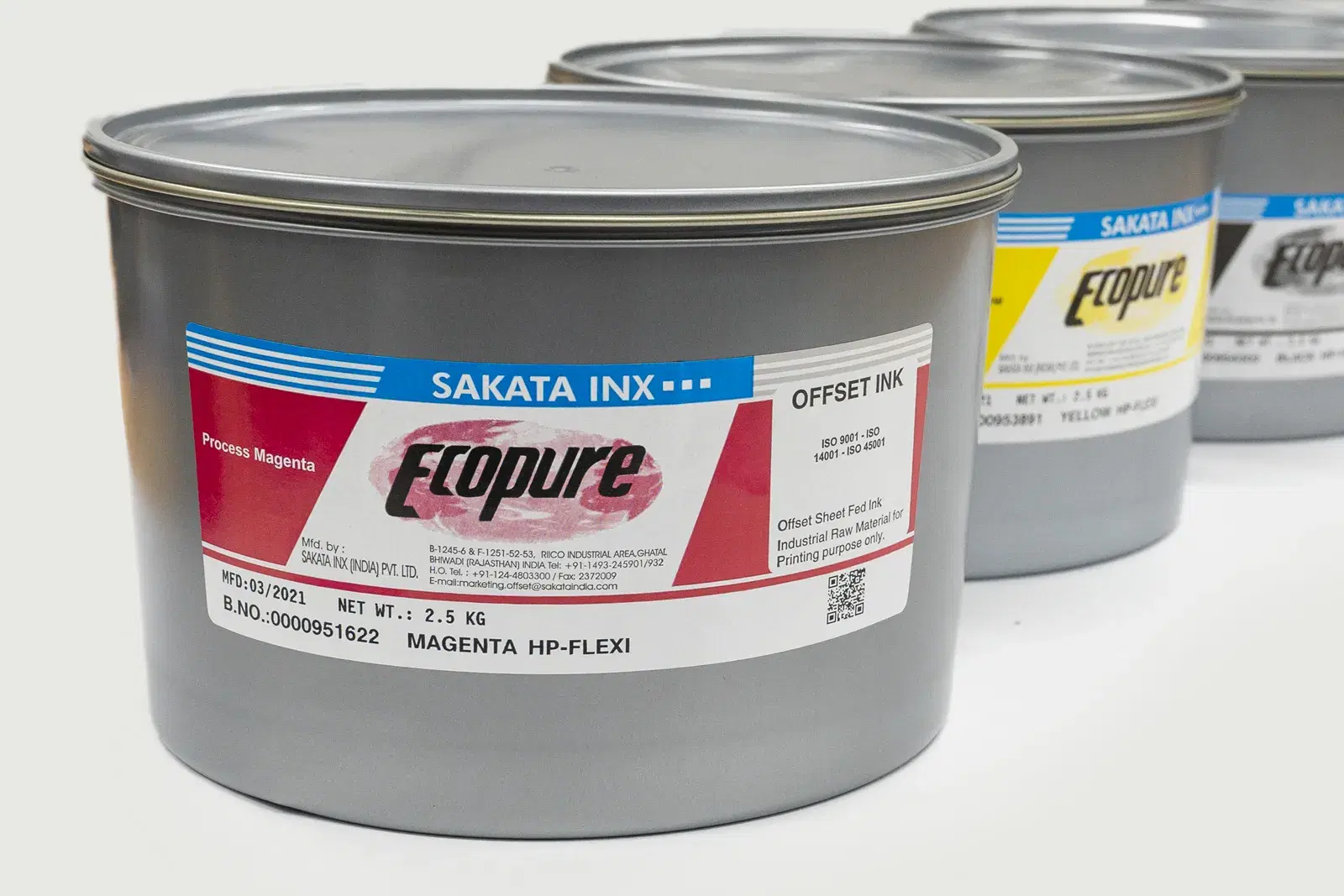
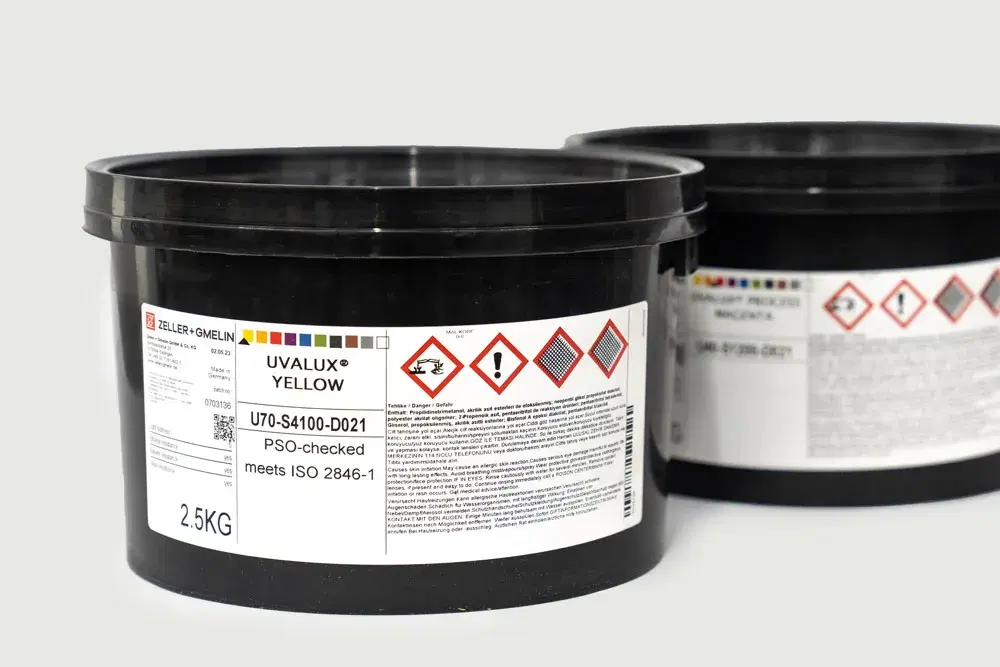
Correct ink selection can prevent 70% of drying problems. High-quality ink formulations are more tolerant of ambient condition variations. SAKATA INX CMYK series, produced with Japan's advanced chemistry infrastructure, offers stable drying characteristics across wide temperature and humidity ranges. Zeller+Gmelin UV series eliminates set-off and drying problems entirely through instant curing — particularly preferred for film and plastic substrates where conventional drying is unreliable.
06Frequently Asked Questions
How long does ink drying take? Oxidative drying in offset printing generally completes in 6-12 hours; full hardness is reached within 24-48 hours. UV inks cure instantly within seconds. Ambient temperature and humidity significantly affect these timeframes — low temperature or high humidity can double or triple drying time.
How can I quickly fix set-off problems? Short-term: increase anti-set-off spray usage and reduce stacking height. Long-term: reduce ink film thickness, choose lower tack ink, and control ambient humidity. SAKATA INX tack-optimized ink series provides a comprehensive solution for chronic set-off problems.
What should I do about chalking? First, check paper-ink compatibility. For absorbent papers, use inks with higher vehicle content or apply overprint varnish. As SIM Printing Supplies, Turkey's authorized distributor of SAKATA INX and Zeller+Gmelin, our technical team is available to analyze your drying issues on-site and provide the most appropriate solution.
Gallery
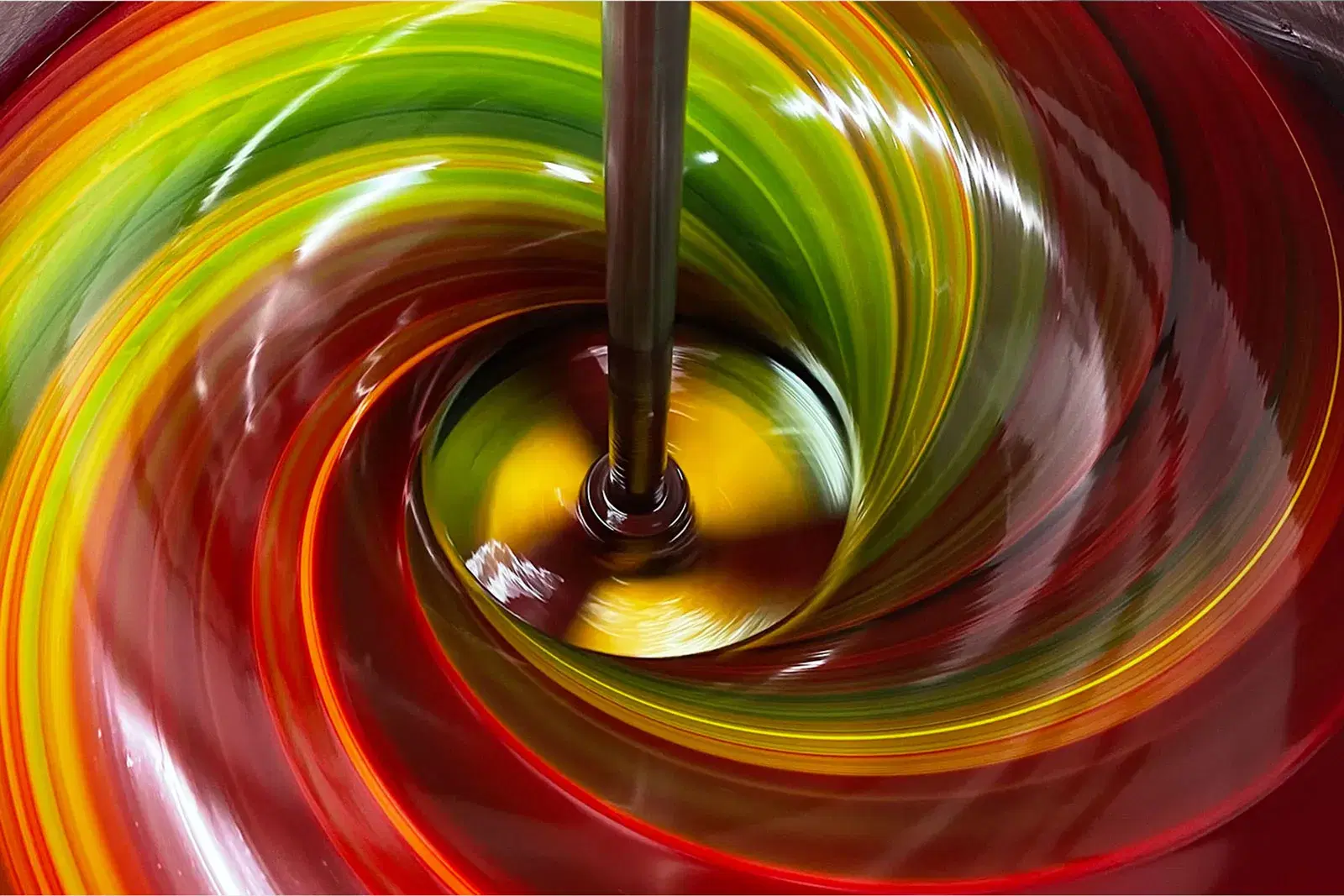
Frequently Asked Questions
- How long does ink drying take in offset printing?
- Oxidative drying completes in 6-12 hours; full hardening takes 24-48 hours. UV inks cure instantly in seconds. Paper type, ink film thickness, and ambient humidity directly affect drying speed.
- How can set-off (color smearing) be prevented?
- Short-term fix: increase anti-set-off powder and reduce stack height. Long-term solution: reduce ink film thickness, lower viscosity, and control humidity. Switching to a fast-setting ink series is also an effective remedy.
- What is chalking and how is it fixed?
- Chalking occurs when the ink vehicle is over-absorbed into the paper, leaving pigment unbound on the surface. It can be prevented by reducing paper absorbency, ensuring proper surface tension, and matching ink to paper type. SIM's technical team offers on-site diagnosis and solutions.
Related Products
SIM Baskı Malzemeleri
Get a Custom Quote for Your Project
Contact us for information about our wide product range and custom color production.