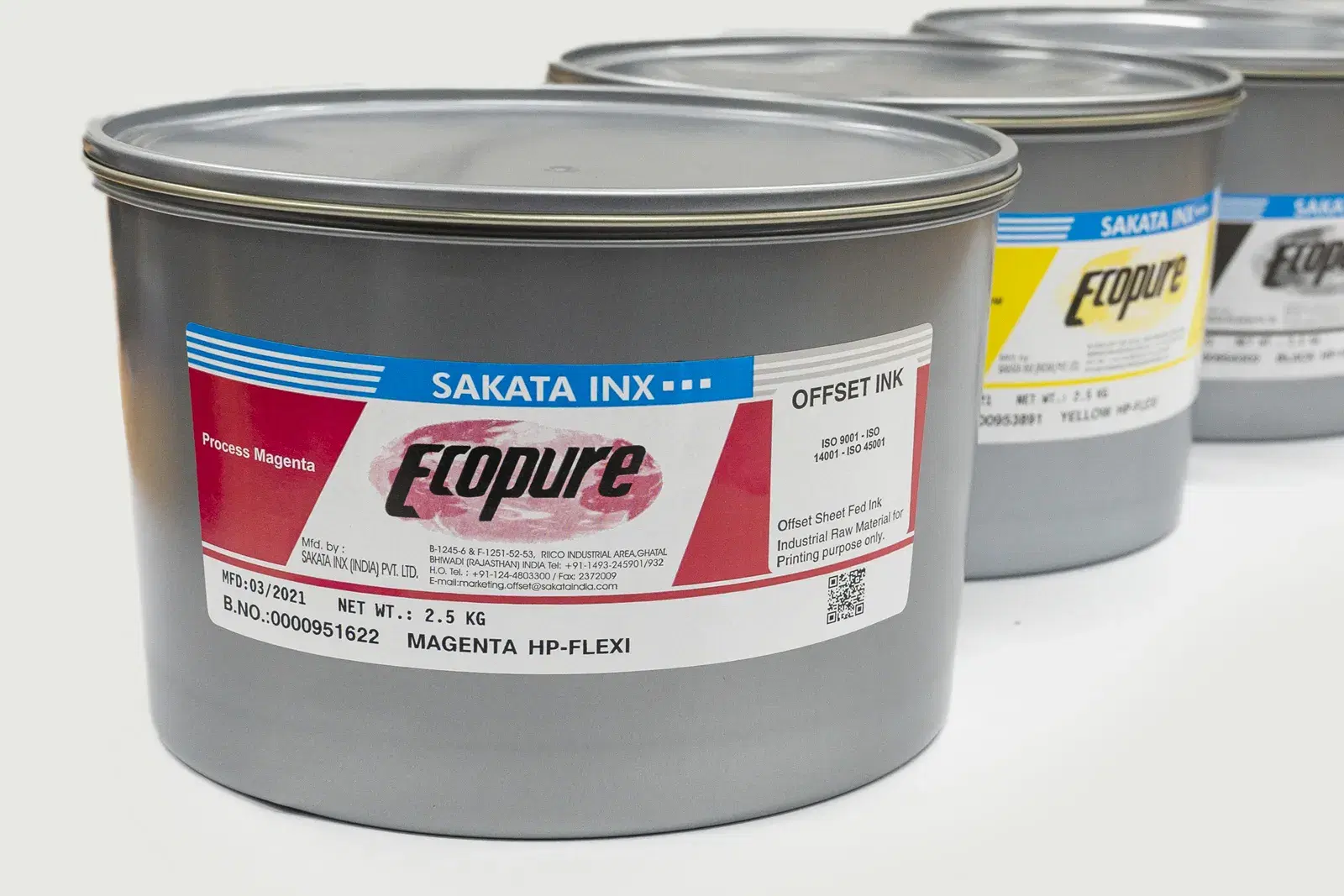
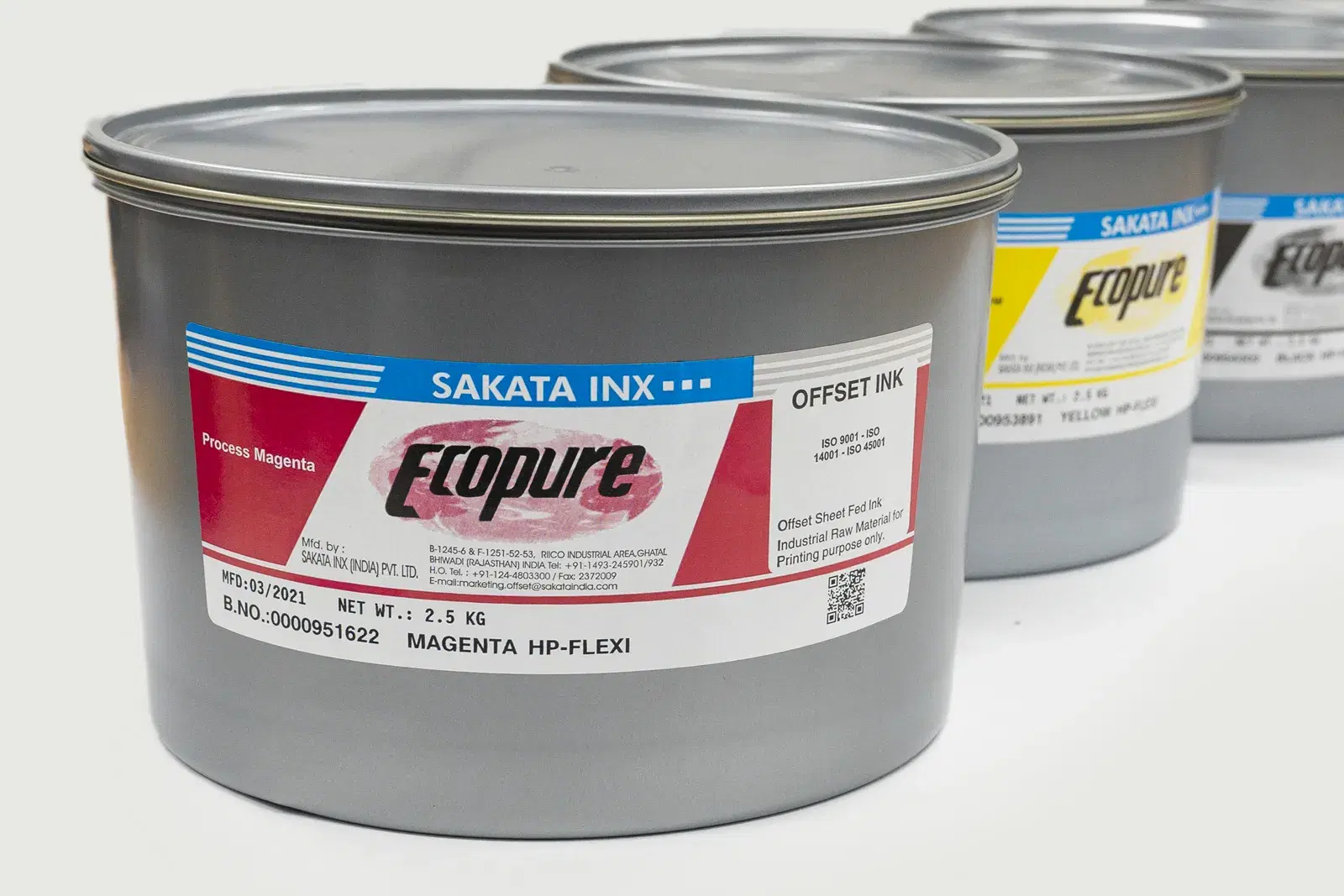
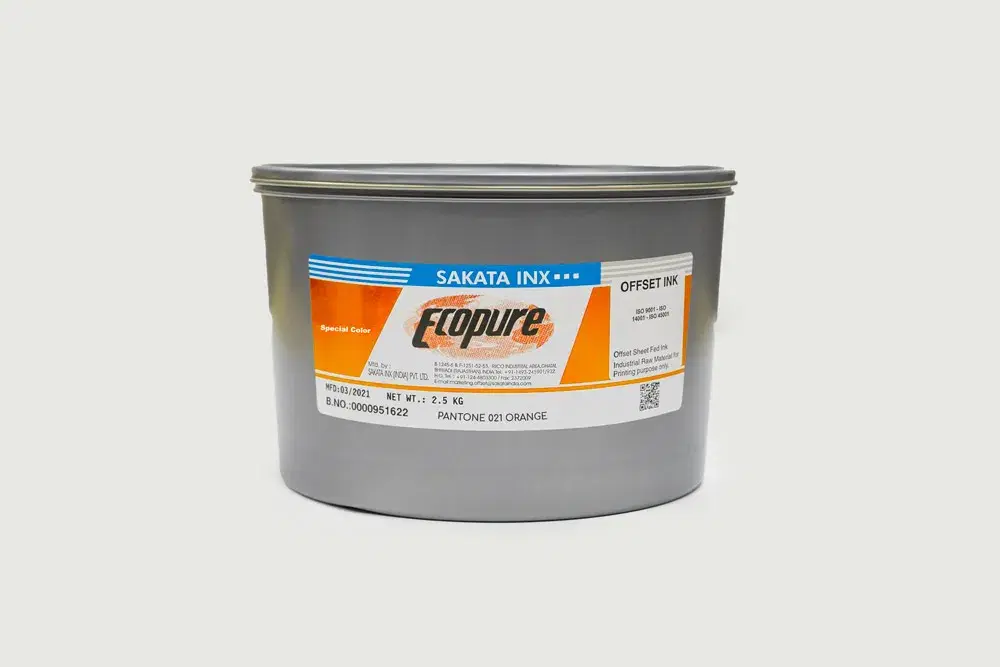
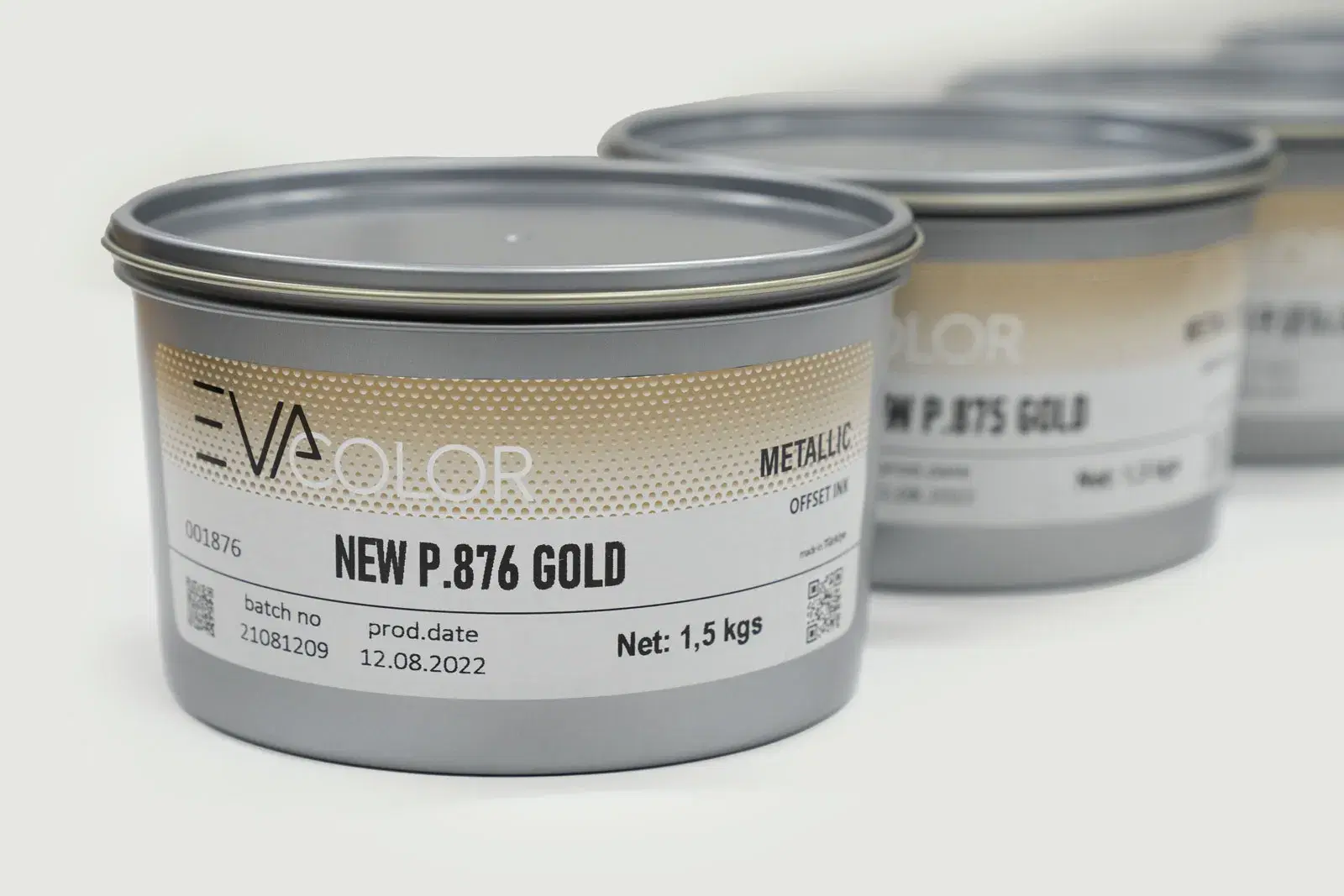
One of the questions printers ask most is why offset ink prices differ so much: the same one-kilogram can sells at one price from one brand and several times that for another type. The difference is not arbitrary; eight factors, from pigment to packaging, regulation to currency, set the price. This article brings together those eight factors, the correct comparison method of cost per thousand sheets, a relative price table by ink type and seven concrete ways to save, written for printers in Turkey and buyers sourcing ink from Turkey. Product counterparts: SAKATA INX CMYK, the PANTONE series and EVA COLOR metallic; for the type and brand matrix see the printing inks hub.
01How an ink price is built: the cost structure
The price of a can of offset ink has three layers: raw material (pigment, varnish, resin, driers, additives), manufacturing and quality control (dispersion, milling, laboratory measurement, filling) and distribution (import, warehousing, logistics, technical support, documentation). Pigment is the most expensive raw material and the item that changes price most by type. The manufacturer's and distributor's margin pays for technical support and stock; a seller who does not support you at the press turns a "cheap" price expensive at the first drying problem.
Price lists are usually per kilogram and per packaging unit, and for imported inks they are currency-based, so they move with exchange rates. Rather than quoting a fixed 2026 number, it is more durable to know which factors move the price and in which direction: when a quotation arrives you can see why each item differs and compare on a like-for-like basis.
02The 8 factors that set the price
1. Pigment and raw material. Process colours use organic pigments; metallic inks carry bronze and aluminium platelets, fluorescents special pigments, UV inks photoinitiators and oligomers, each multiplying cost. Higher pigment loading raises the price per kilogram but lowers consumption because target density is reached with a thinner film. 2. Ink type and drying system. Conventional sheetfed is the most economical group; UV and LED-UV series cost more, in return the drying wait, powder and set-off waste disappear. 3. Brand and origin. Japanese, German and Dutch imported series and Turkish-made series sit at different price–performance points; origin also means customs, freight and currency exposure.
4. Packaging unit and quantity. Unit price falls noticeably from 1 kg cans to 2.5 kg cans and 20 kg drums, and regular purchases under an annual agreement run below list price. 5. Custom colour formulation. Laboratory time, sampling, press trial and recipe development are priced into the first production and fall on repeat orders because the recipe is archived. 6. Regulation and documents. Low-migration series, EuPIA statements, migration certificates and test reports carry both formulation and documentation cost and are unavoidable for food packaging. 7. Logistics and delivery terms. Same-day delivery in Istanbul is included for stock; domestic freight, seasonal temperature control and, for export, the Incoterm (EXW, FOB, CIF) set the landed price. 8. Currency and payment terms. Imported ink is currency-based; payment terms and exchange volatility shorten quotation validity.
03Relative price comparison by ink type
The table shows relative price ranges with conventional CMYK set to 1, not absolute prices, and what that price buys. Ratios vary by brand, packaging and currency and are fixed in the quotation.
| Ink type | Relative price per kg (CMYK = 1) | Why | Consumption effect |
|---|---|---|---|
| Conventional CMYK (ISO 2846-1) | 1 | Organic pigment, standard vehicle | 10–20% lower consumption with a high-pigment series |
| PANTONE base colours | 1.2–2 | Special pigments, small batches | One-pass spot colour; less waste than CMYK simulation |
| Custom colour (laboratory) | 1.5–2.5 (first production) | Formulation, sampling, 5 kg minimum | Recipe archived; cost falls on repeat orders |
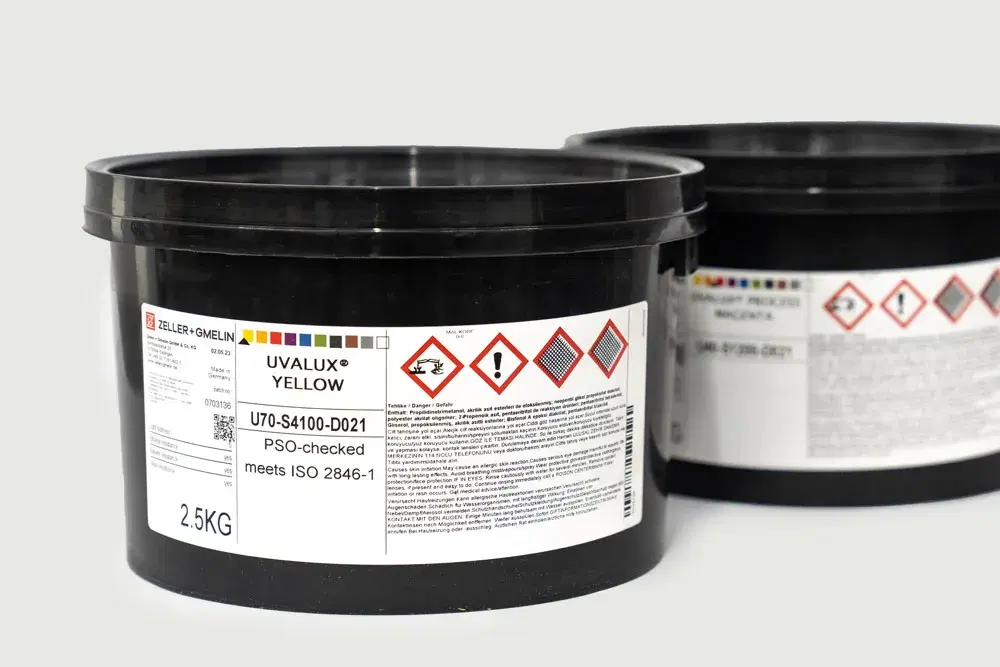
| UV / LED-UV | 1.8–3 | Photoinitiators, oligomers | No drying wait or powder; fast finishing |
| Metallic gold / silver | 2.5–5 | Bronze / aluminium pigment | Needs a heavier film; economical against hot-foil |
| Fluorescent | 2–3.5 | Fluorescent pigment, lower fastness | May need a double hit; the only option for neon work |
| Low-migration (food) | 1.3–2 (on top of type) | Selected raw materials, documents | Required by regulation; no alternative |
Price per kilogram alone misleads: an ink with 20% more pigment can cost 15% more per kilogram and still be cheaper per thousand sheets. The unit of comparison is always ink plus waste cost per thousand sheets.
04The right comparison: cost per thousand sheets
Four steps. First, in a press trial on the same paper, at the same density target and speed, weigh the ink consumed per thousand sheets (duct before and after, or the press management software). Second, multiply by the price per kilogram: that is ink cost per thousand sheets. Third, multiply the waste sheets from the same trial by paper and press-hour cost and add them; set-off, toning and drying waste are ink-dependent. Fourth, add the difference in powder, wash chemicals and make-ready time. The result is the real cost difference and often reverses the price-per-kilogram ranking.
| Item | Ink A (low price) | Ink B (high pigment) | Note |
|---|---|---|---|
| Price per kg (relative) | 1.00 | 1.15 | 15% list price difference |
| Consumption per 1,000 sheets | 1.00 | 0.85 | B reaches density with a thinner film |
| Ink cost per 1,000 sheets | 1.00 | 0.98 | A and B almost equal |
| Waste (set-off, toning) | 5% | 3% | B sets faster, less powder |
| Total per 1,000 sheets | 1.00 | 0.93 | B is 7% more economical |
057 ways to save
First, choose the packaging unit by job: 2.5 kg cans or drums for CMYK consumed daily, 1 kg for rarely used spot colours; skinning loss in an opened can is also a cost. Second, share annual consumption with the supplier and get contract pricing; a stock agreement also protects against currency swings. Third, use spot ink for brand colours instead of proofing CMYK simulations repeatedly; waste and rejection cost more than the ink. Fourth, work with a laboratory that archives recipes, so repeat orders carry no formulation fee or sample round. Fifth, print to measured density; an operator adding ink by eye raises both consumption and dot gain. Sixth, control drying and water balance, where the waste cost far above the ink price is generated (see water balance and drying problems). Seventh, buy ink, blanket and chemicals from one supplier so incompatibility problems and a second counterpart disappear.
06The hidden costs of cheap ink
The bill for a low-priced ink is usually paid elsewhere: low pigment loading means a thicker film and higher consumption; unbalanced tack means picking and paper dust; weak driers mean slow drying, set-off and pile waiting time; lot inconsistency means re-adjustment and proofing on every order. An undocumented product can fail a customer audit on a food-packaging job. Each item is charged to press hours and paper, which is why the TDS, a lot-consistency commitment and field support must be counted as part of the price when comparing quotations. For export buyers, add documentation and consolidation: one supplier with English TDS/SDS and one mixed shipment is cheaper than three separate imports.
07Which details in an RFQ change the price?
An accurate price needs accurate information; a quotation based on gaps either carries an expensive safety margin or ends in surprises. Seven details directly affect the price: the press and number of units (sheetfed or web, IPA or alcohol-free), paper type and weight, average run length and estimated monthly consumption, the colour reference (ISO 2846-1 CMYK, a PANTONE code or a custom colour), packaging preference (1 kg or 2.5 kg cans, cartridges), delivery frequency (fixed weekly shipment or call-off) and any regulatory requirements (low migration, mineral-oil-free, EuPIA compliance). A printer with a known monthly consumption can sign an annual frame agreement, which fixes the price against currency movements for a period and lowers the price per kilogram through larger packaging units.
08Price versus quality: which ink class for which job?
Not every job needs the most pigmented ink, and not every job can run on the cheapest. The ink class follows the quality expectation and end use of the job: a standard CMYK series for forms and short-run commercial work; a high-pigment ISO 2846-1 series, with PANTONE spot colours where needed, for packaging and catalogues carrying brand colours; a certified low-migration series for food and cosmetics packaging, with the cost of certification understood as part of the price. See choosing offset inks and ink selection for packaging for the detailed series choice.
| Job type | Recommended ink class | Why | Price effect |
|---|---|---|---|
| Forms, leaflets, short-run commercial | Standard conventional CMYK | Wide colour tolerance, speed first | Lowest price per kg |
| Catalogues, magazines, corporate print | High-pigment CMYK (ISO 2846-1) | Colour consistency and less waste | Higher per kg, lower per thousand sheets |
| Packaging and labels with brand colours | PANTONE or custom colour | Brand colour in one pass, more accurate than CMYK simulation | 1.2–2.5×; falls on repeat orders |
| Food, toy and cosmetics packaging | Low-migration series | EU 1935/2004 and 10/2011 compliance, documented production | Certification and raw-material cost added |
| Luxury packaging, covers, invitations | Metallic, fluorescent or UV | Visual impact, decorative finish | 2–4×, with higher consumption |
09Market dynamics affecting prices in 2026
Three external forces act on ink prices in 2026. Raw materials: organic pigments, resins and vegetable oils follow petrochemical and agricultural markets, and the concentration of pigment production in Asia passes supply-chain disruptions straight into prices. Currency: because inks and their raw materials are largely imported into Turkey, EUR/USD-based costs update local price lists monthly and sometimes weekly, which is why quotations are usually currency-based or short-dated. Regulation and sustainability: demand for mineral-oil-free, vegetable-oil-based, low-migration and EuPIA-compliant series is rising; these can cost more than standard inks but are increasingly mandatory in packaging specifications. The right purchasing response is to plan consumption rather than chase the price: annual frame agreements, larger packaging units and consolidation with one supplier dampen the effect of currency and raw-material swings. Sustainable options are covered in environmentally conscious printing materials.
10Pricing and quotation at SIM
SIM supplies SAKATA INX CMYK and PANTONE series from stock, EVA COLOR metallic and fluorescent inks from its own production and Zeller+Gmelin UV series as distributor; a quotation is prepared within one working day from press, paper and job details and states the price per kilogram together with the recommended packaging unit, lead time and document list. Custom colours: 5 kg minimum, 1–3 working days after sample approval, archived recipes; export customers receive EXW/FOB/CIF quotations and English TDS/SDS. For regular consumption an annual agreement and stock plan are set up. For type and brand selection start with the ink selection guide and the printing materials guide.
Sources
Gallery
Frequently Asked Questions
- How much does offset ink cost per kilogram in 2026?
- There is no single number: within one type, brand, packaging unit, pigment loading and currency set the price; conventional CMYK is the most economical group, UV roughly 1.8–3 times and metallic 2.5–5 times that. We quote current, packaging-based prices within one working day from press, paper and job details.
- Does buying cheap ink really save money?
- Usually not: a low-pigment ink needs a thicker film and higher consumption, dries slowly, produces set-off and waste, and lot inconsistency means re-adjustment on every order. On an ink-plus-waste-per-thousand-sheets basis the high-pigment ink is usually cheaper.
- Why does a custom colour ink cost more than a standard colour?
- The first production carries laboratory time, sampling, a press trial and recipe development, with a 5 kg minimum. Because the recipe is archived, repeat orders do not repeat these items and the price approaches standard level; for brand colours the waste and rejection cost of CMYK simulation is usually higher.
Related Products
SIM Baskı Malzemeleri
Get a Custom Quote for Your Project
Contact us for information about our wide product range and custom color production.