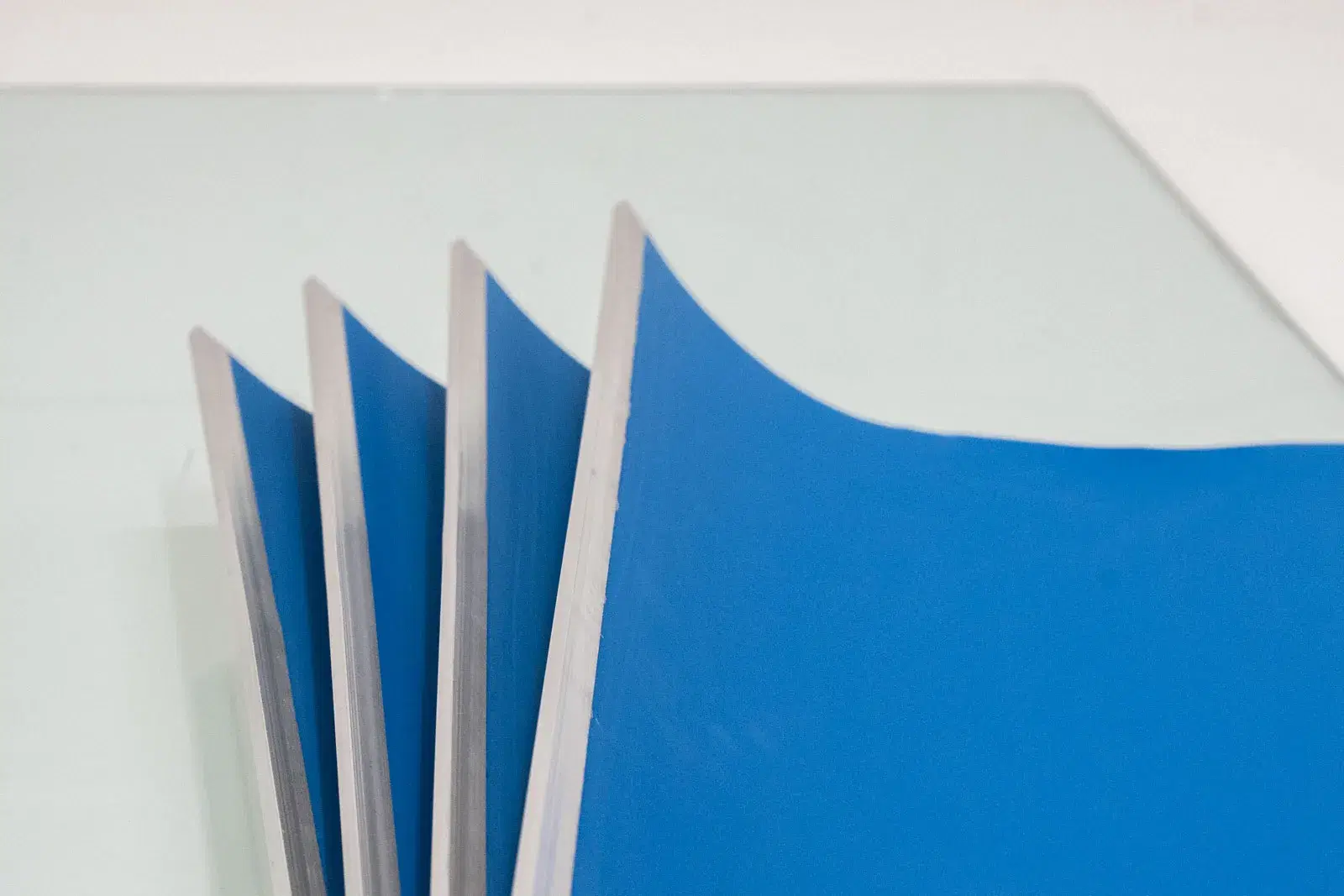
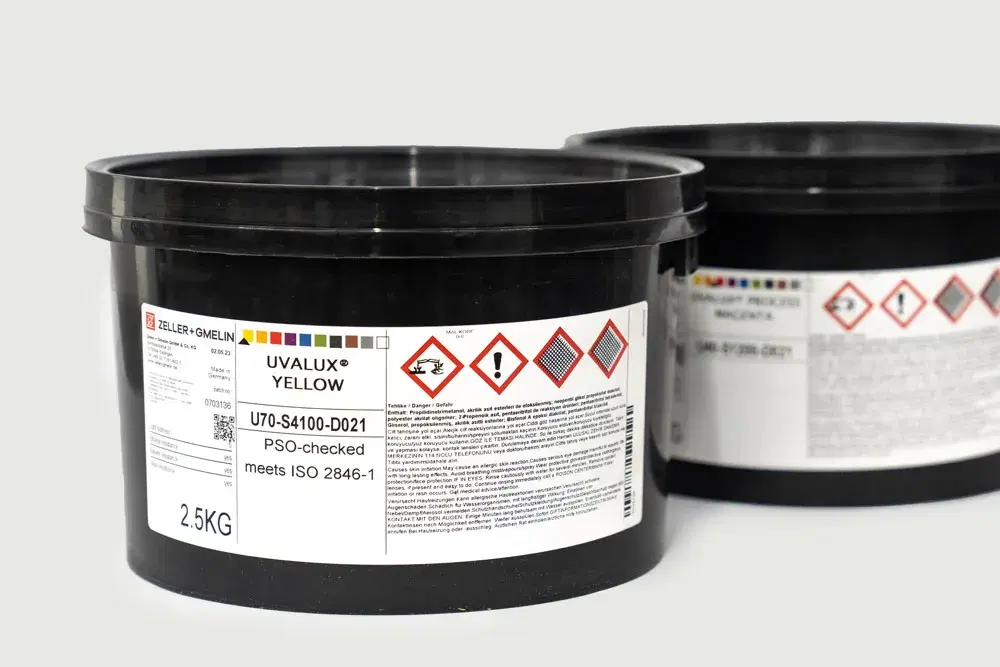
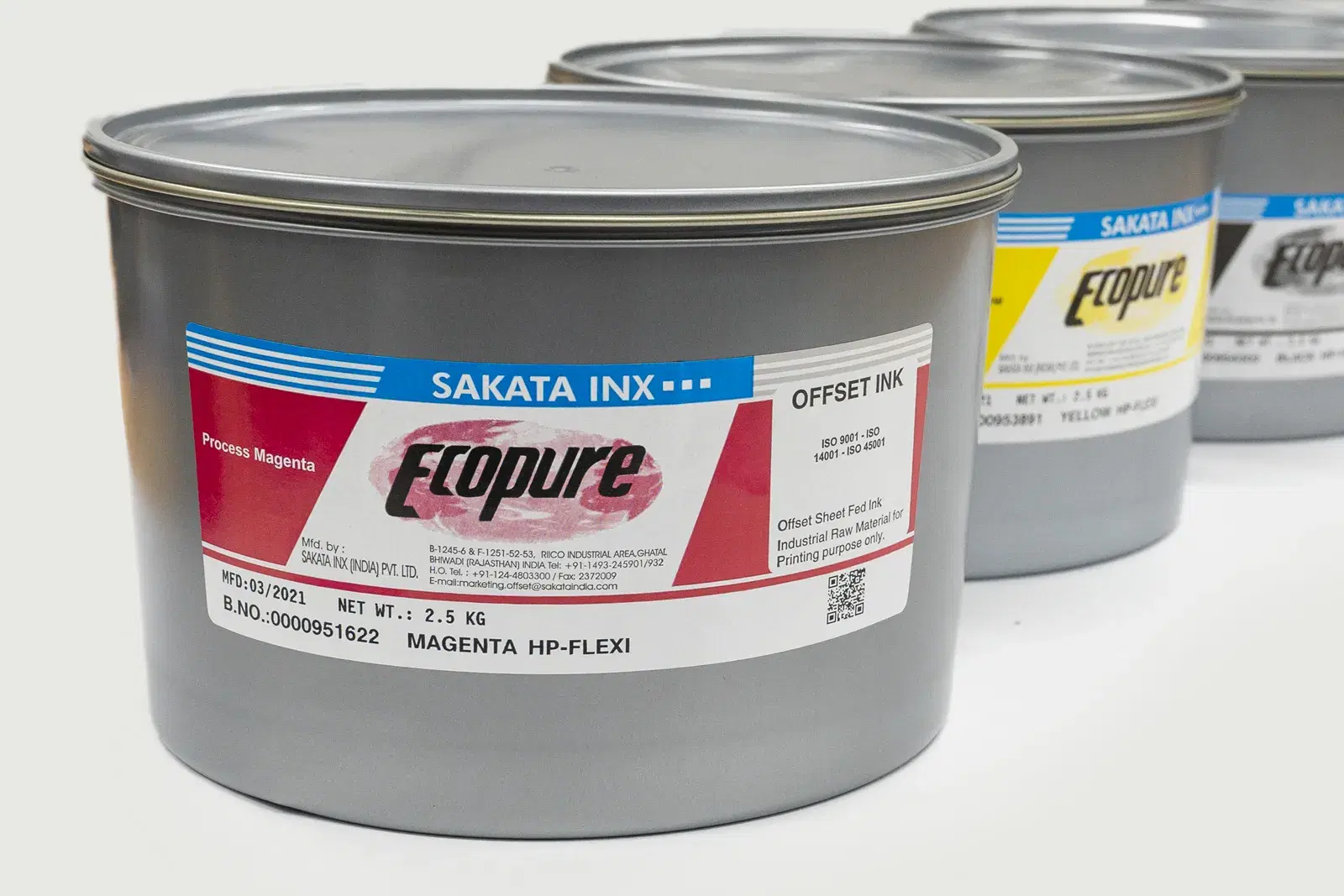
The printing blanket is the rubber–fabric composite that takes ink from the plate and lays it on the paper; dot gain, dot sharpness, sheet transport and waste depend directly on its construction and condition. Yet in most print shops a blanket is chosen by "the size that fits the press", while compressible vs conventional construction, thickness tolerance, surface hardness, fabric plies and ink compatibility decide the printed result. This guide reduces the choice to six criteria, provides two tables and explains how to recognise replacement time, for printers in Turkey and buyers sourcing blankets abroad. Products: SIM's own brand VECTOR printing blankets, Zeller+Gmelin UV inks for UV work and SAKATA INX CMYK for conventional sets; for the blanket's place in the material system see the printing materials guide.
01How a blanket works: layers and their jobs
An offset blanket has four layers: the surface rubber that accepts and releases ink (0.3–0.5 mm, ground), the compressible layer that distributes pressure (micro-porous rubber), the fabric plies that give dimensional stability (usually 3 or 4) and the adhesive that bonds them. The hardness and roughness of the surface rubber govern ink transfer and sheet release: too hard a surface raises dot gain and does not release the sheet; too soft a surface blurs dot sharpness. The compressible layer absorbs pressure fluctuations (thickness tolerance, paper grammage changes, cylinder eccentricity); without it, excess pressure shows directly as dot gain and blanket fatigue.
02Compressible or conventional?
A conventional blanket has no compressible layer; under pressure the rubber bulges sideways, which raises dot gain and disturbs sheet transport at high speed. A compressible blanket absorbs the same pressure as volume, giving lower dot gain, sharper dots, better sheet release and recovery after a smash. On modern presses and above 10,000 sheets per hour compressible is the standard; conventional may be chosen only on old slow presses, in some special applications or on short-lived jobs where cost is the only criterion. The table compares the two constructions.
| Criterion | Compressible blanket | Conventional blanket |
|---|---|---|
| Pressure fluctuation | Absorbed by the micro-porous layer | Transmitted directly to the surface |
| Dot gain | Low, stable | Higher, pressure-sensitive |
| Dot sharpness | High | Medium |
| Sheet release / transport | Good (also at high speed) | Problematic at high speed |
| Smash recovery | Good | Poor; permanent mark |
| Life | Long | Shorter |
| Price | Higher | Lower |
| Use | Modern sheetfed and web presses (standard) | Old slow presses, special jobs |
03Size and thickness: the right values for the press
A blanket is cut to the cylinder dimensions stated by the press manufacturer; width and length must be accurate to the millimetre, otherwise tension and register problems follow. Thickness is chosen from the cylinder undercut and the packing: common sheetfed values are 1.70 mm (3-ply) and 1.95 mm (4-ply), web offset 1.95 mm and above. Thickness tolerance (±0.02 mm) matters: an out-of-tolerance blanket creates different pressure along the cylinder and tonal variation. A barred blanket mounts quickly with correct tension; a barless blanket is barred in the field. The table summarises common size–thickness combinations and check points; the exact value for your press is in the press manual and the TDS.
| Press type | Typical thickness | Fabric plies | Check point |
|---|---|---|---|
| Small-format sheetfed (A3–B3) | 1.70 mm | 3-ply | Cylinder undercut; total thickness with packing |
| Medium/large-format sheetfed (B2–B1) | 1.95 mm | 4-ply | Thickness tolerance ±0.02 mm; tension torque |
| Perfecting press | 1.95 mm | 4-ply | Back-side set-off; low sheet release force |
| Web offset (heatset/coldset) | 1.95–2.00 mm | 4-ply | Heat resistance; edge sealing |
| UV / hybrid presses | Press values | 3–4-ply | EPDM / UV-compatible surface rubber |
04Surface hardness, roughness and ink compatibility
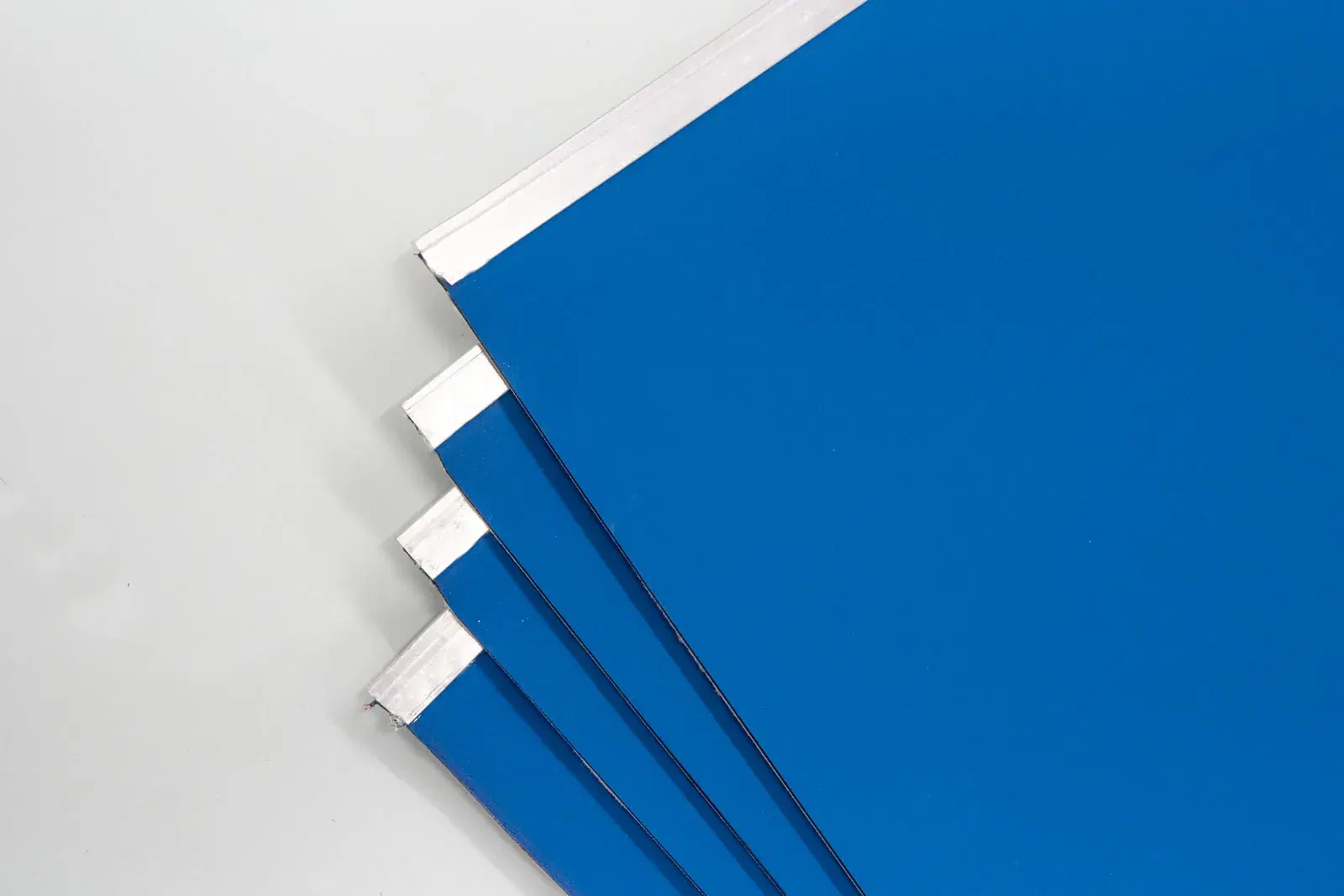
Surface hardness is measured in Shore A; the typical sheetfed range is 75–80 Shore A. A harder surface gives sharp dots and low dot gain but makes sheet release harder; a softer surface releases the sheet easily and transfers solids evenly. Surface roughness (Ra) governs the evenness of the ink film: low Ra (fine grinding) for fine-screen, high-quality work, slightly higher Ra for heavy-film solid work. Ink compatibility is the most overlooked criterion: a conventional blanket swells and hardens with UV ink and UV wash chemicals; on presses running UV or hybrid inks an EPDM or UV-compatible surface rubber is mandatory. The VECTOR range offers conventional and UV-compatible grades from stock.
05Life and replacement signs
Depending on press conditions a blanket lasts 500,000–2,000,000 impressions; paper dust, calcium build-up, the wrong wash chemistry, excess pressure and smashes shorten it. Signs that replacement is due: rising dot gain at unchanged settings, tonal variation and mottle in solids, doubling, glazing and glass-like hardening of the surface, cracks and peeling at the edges, and an ink take-up/release balance that washing no longer restores. Planned replacement is cheaper than waiting for quality to drop: keep a schedule by impression count and calibrate the packing together with the blanket. Maintenance details are in blanket selection and care and the blanket's effect on waste in reducing waste.
06Mounting and tensioning: the right blanket fails with the wrong mounting
The effort spent on blanket selection can be wasted by five careless minutes at mounting. First, the packing calculation: blanket plus packing thickness must match the cylinder undercut and the manufacturer's height above bearer (usually 0.05–0.15 mm), measured with a packing gauge and recorded per unit. Second, tensioning: blanket bars are tightened to the manufacturer's torque, in a crosswise sequence and in steps; over-tensioning stretches the fabric and thins the blanket, under-tensioning causes slipping and doubling. Third, re-tensioning: a new blanket is checked after the first 500–1,000 sheets and then at shift start, because the fabric relaxes in the first hours. Fourth, cleanliness: the cylinder surface must be free of paper dust, old adhesive and rust before mounting; a single scrap of paper under the blanket leaves a permanent high spot. Keeping mounting records (date, blanket lot, packing, torque) is the habit that saves most time in later troubleshooting.
07Which press problems come from the blanket?
Not every print defect comes from the blanket, but for several the blanket is the first checkpoint. Slur and doubling usually follow loose tension or wrong packing height. Ghosting appears when the blanket carries ink or rust marks from the previous job. Excess dot gain points to too much pressure or a hard-surfaced conventional blanket; see dot gain control for measurement and reference values. Streaks are often mistaken for gear streaks when local wear of the blanket surface produces the same look. Picking and piling relate to a glazed, tacky surface and are solved by proper washing and surface restoration. A smash is a local depression from a folded sheet or foreign object; small ones can be lifted temporarily with repair paste, large ones need replacement.
| Press problem | Possible blanket cause | Check and fix |
|---|---|---|
| Slur, doubling | Loose tension, wrong packing | Torque and packing measurement, re-tension |
| Ghosting | Ink or rust marks from previous job | Deep clean, surface restorer, replace if needed |
| Excess dot gain | Too much pressure, hard conventional surface | Pressure setting, compressible blanket |
| Streaks and lines | Local wear, surface damage | Surface inspection, distinguish from gear streaks |
| Picking and piling | Glazed, tacky surface | Suitable wash, surface restoration, water balance |
| Local white area (smash) | Folded sheet, foreign object | Repair paste (small), blanket replacement (large) |
08UV, hybrid and conventional: surface material and chemical resistance
The surface rubber is chosen for the ink and the wash. For conventional oil-based inks NBR (nitrile) is standard and resists oils and conventional washes well. UV and LED-UV monomers swell NBR, so series such as Zeller+Gmelin UV offset inks run on EPDM or UV-grade surfaces. Hybrid presses printing both chemistries use multi-purpose hybrid blankets, which give up a little peak performance but remove the need to swap blankets between jobs. The wash must match the surface: an aggressive conventional solvent hardens a UV blanket, and a UV wash under-cleans a conventional one. Coating units are a separate category with coating blankets or plates of a different surface structure. We specify the right surface within VECTOR printing blankets from press, ink and wash data; chemical compatibility criteria are in our printing chemicals buying guide.
09Cost: not the blanket price but the cost per sheet
The most common buying mistake is to look at the unit price. Real cost has three parts: blanket price ÷ sheets printed over its life, press time lost at each change (downtime cost × change time) and blanket-related waste. On that basis a blanket twenty percent more expensive but forty percent longer-lived is clearly cheaper, and fewer changes mean fewer register and colour adjustments. Keep a blanket log per unit: mounting date, lot, sheets printed, reason for change (wear, smash, quality drop). After a few months the log shows which blanket lasts longest on which job mix and which unit suffers most smashes, a pointer to a feeding problem. The waste side is covered in reducing waste in offset printing. Units running fast-drying series such as SAKATA INX CMYK also expose the blanket surface to less chemistry, which extends its life.
10Pre-order checklist and blankets at SIM
Are the press model and cylinder size (mm) clear? Do thickness plus packing match the cylinder undercut? Is the ink system conventional or UV/hybrid (surface rubber type)? Barred or barless? Is the wash chemistry suited to the blanket type? Have the expected run and the replacement schedule been set? VECTOR blankets are SIM's own brand: cut to size for sheetfed and web presses, delivered with or without bars, conventional and UV-compatible grades stocked in Istanbul; same-day delivery in Istanbul for stock, 1–2 working days across Turkey, and rolled packaging for export with the manufacturer TDS in English. Our technical team accompanies tension and packing adjustment at the press on first installation.
Sources
Gallery
Frequently Asked Questions
- Should blanket thickness be 1.70 mm or 1.95 mm?
- The press manufacturer's cylinder undercut decides: blanket thickness plus packing must match that value and the target printing pressure. 1.70 mm (3-ply) is common on small formats, 1.95 mm (4-ply) on medium–large formats and web offset; the exact value is in the press manual and the tolerance should be ±0.02 mm.
- Can a conventional blanket be used with UV ink?
- No. Conventional surface rubber swells, hardens and loses adhesion with UV ink and UV wash chemicals; presses running UV or hybrid inks must use an EPDM or UV-compatible surface rubber blanket. The VECTOR range offers UV-compatible grades from stock.
- When should a blanket be replaced?
- Between 500,000 and 2,000,000 impressions depending on press conditions, but the signs matter more than the calendar: rising dot gain at unchanged settings, tonal variation in solids, doubling, surface glazing and hardening, edge cracks and ink transfer that washing no longer restores. Planned replacement with packing calibration is cheaper than waiting for quality to drop.
Related Products
SIM Baskı Malzemeleri
Get a Custom Quote for Your Project
Contact us for information about our wide product range and custom color production.