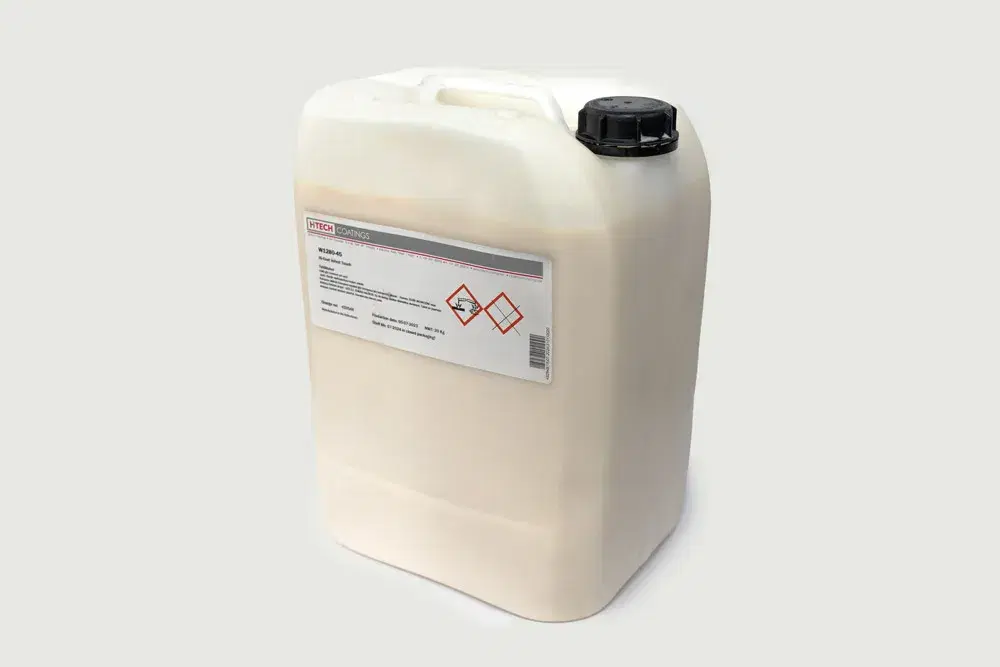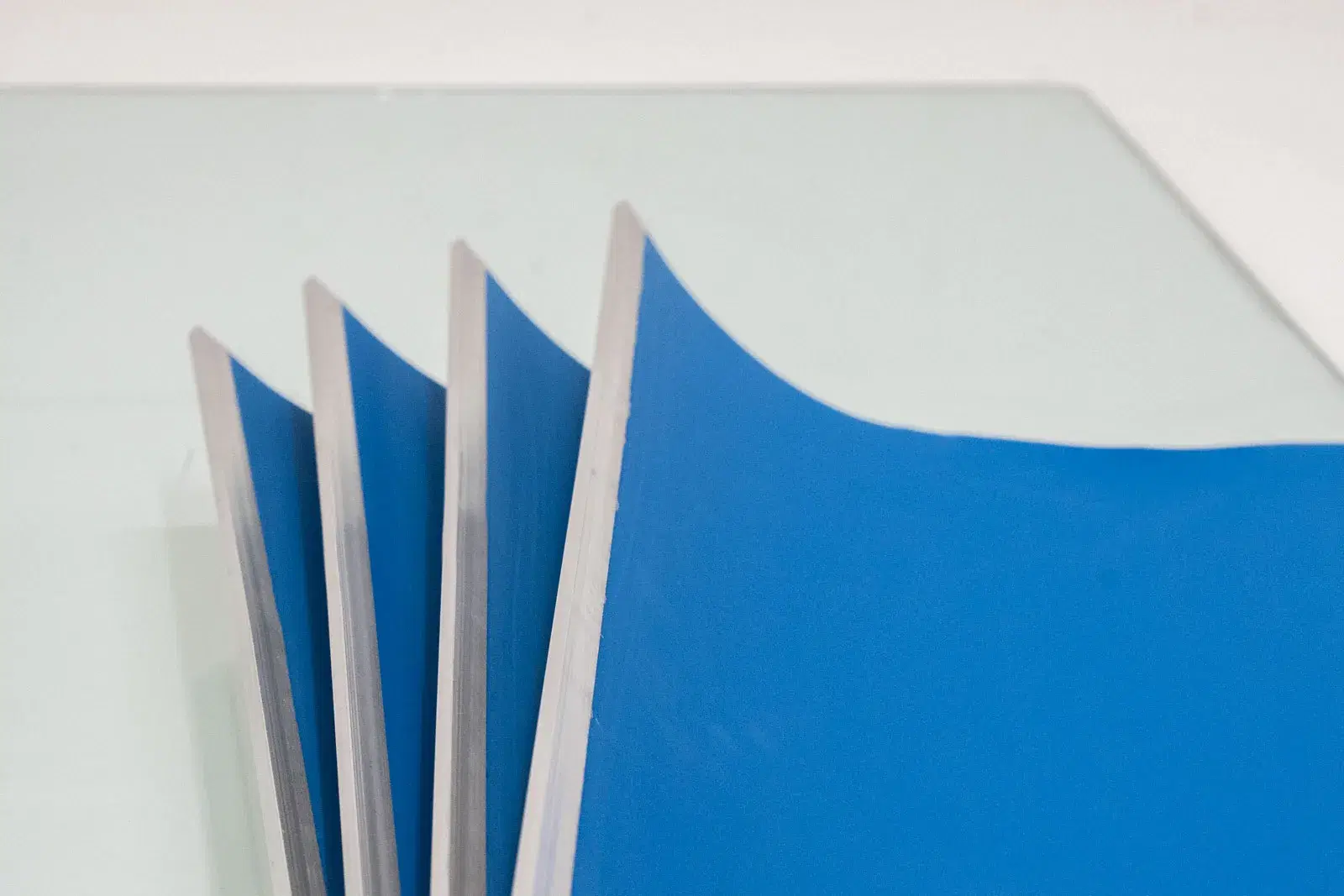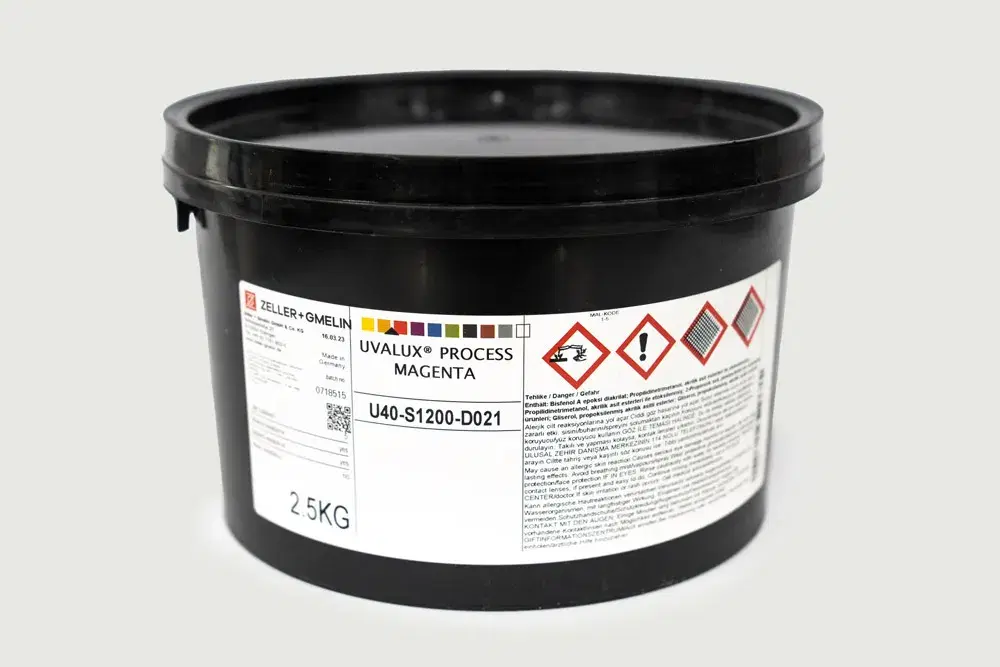
For printers planning a move to UV offset the first question is no longer "UV or conventional" but "conventional UV or LED-UV". Both offer instant curing, adhesion to non-absorbent substrates and the end of powder and drying waits; they differ in lamp technology, ink formulation, energy and heat load, investment and running cost. This article compares the two systems under ink, lamp and cost headings and provides a decision table and a conversion checklist, for printers in Turkey and buyers sourcing UV inks from Turkey. Products: Zeller+Gmelin UV offset inks, UV-compatible VECTOR blankets and Hi-Tech Coatings varnishes; for the type context see the printing inks hub.
01How UV curing works: the common ground
In both systems the ink contains no solvent; photoinitiators absorb UV light at specific wavelengths, generate free radicals and start the polymerisation of oligomers and monomers, so the film solidifies in seconds. Cure quality depends on three variables: lamp spectrum and power (mW/cm²), the match between the ink's photoinitiator system and that spectrum, and film thickness and pigment opacity (whether light reaches the bottom of the film). The difference starts exactly here: conventional UV cures any formulation with its broad spectrum, while LED triggers only the initiators sensitive to its narrow band.
02Lamp: mercury vapour or LED?
Mercury-vapour (arc) lamps produce a broad spectrum between 200 and 450 nm; short wavelengths cure the surface, long wavelengths cure in depth. Their drawbacks: high heat (distortion on heat-sensitive films and thin paper), ozone (ventilation), warm-up and cool-down times (stand-by), lamp life (typically 1,000–2,000 hours) and high energy use. LED arrays emit at a single band, usually 385 or 395 nm: instant on/off, almost no heat, no ozone, more than 10,000 hours of life and markedly lower energy use. Their drawback: without the short wavelengths that help surface cure there is a risk of oxygen inhibition and surface tack, which LED inks solve with dedicated photoinitiator systems.
| Criterion | Conventional UV (mercury vapour) | LED-UV |
|---|---|---|
| Spectrum | Broad, 200–450 nm | Narrow band, 385/395 nm (365 nm optional) |
| Heat load | High; distortion risk on thin paper and film | Very low; suits heat-sensitive substrates |
| Ozone | Generated; ventilation required | None |
| On/off | Warm-up and cool-down, stand-by consumption | Instant; lamp off when the press stops |
| Lamp life | ≈1,000–2,000 h; output declines over time | >10,000 h; gradual decline |
| Energy use | High | Markedly lower (typically less than half) |
| Ink | Standard UV series; wide choice | LED-specific formulation; more expensive |
| Deep cure (opaque colours, heavy film) | Strong | Depends on formulation and lamp power; measurement essential |
03Ink: the formulation difference and dual-cure series
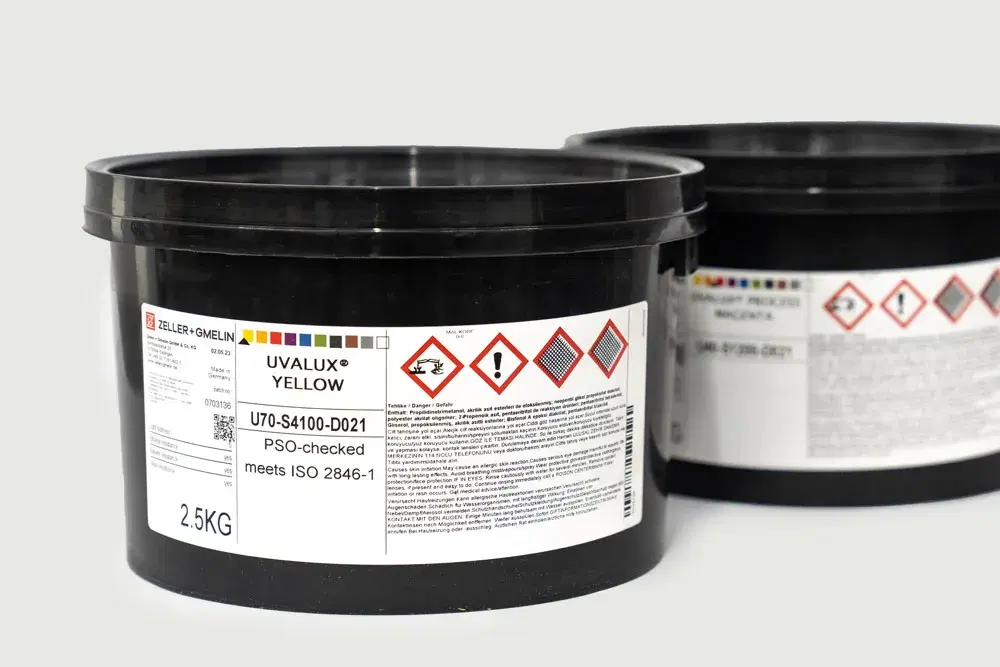
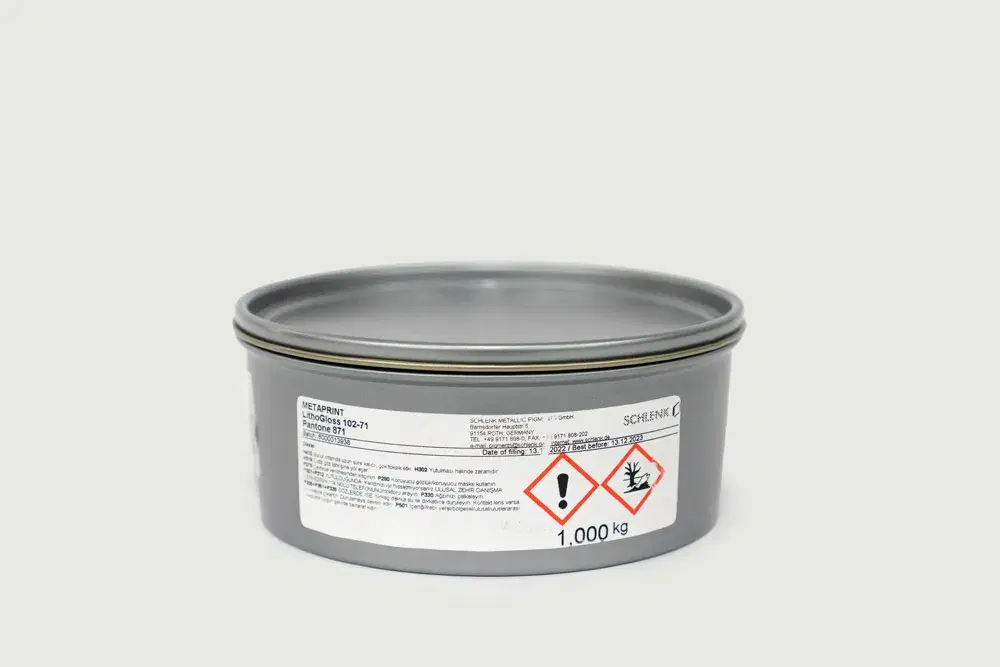
LED-UV inks are formulated with photoinitiators that absorb strongly in the 385–395 nm band; these initiators cost more and some tend to yellow, so whites and light colours need special balancing. In colours that block light, such as opaque white, black and metallics, deep cure is harder than under conventional UV; lamp power, film thickness and press speed are adjusted together. "Dual-cure" or "LED-ready" series that cure under both mercury and LED lamps are available and are the practical answer for hybrid lines or a staged conversion. Zeller+Gmelin UV series are offered in conventional, LED and low-migration (food packaging) options; the series is chosen by curing unit and substrate. In both systems the degree of cure must be checked regularly with rub and solvent (MEK) tests; technology details are in UV ink technology.
04Cost: investment, running and per job
On investment, LED units cost more than conventional UV units; retrofit cost (adding LED curing to an existing press) varies by press type. On running cost LED saves on energy, lamp replacement, ventilation and stand-by losses, while the ink costs more. The decisive question per job is whether the ink price difference is offset by energy and lamp savings: plants with high energy cost, many short jobs (frequent on/off) and a large share of heat-sensitive substrates see a fast LED payback; lines dominated by long runs with heavy opaque and thick-film work keep conventional UV competitive. The table compares the items; figures are fixed in the quotation by press, run length and energy price.
| Cost item | Conventional UV | LED-UV | Comment |
|---|---|---|---|
| Curing unit investment | Low–medium | Medium–high | Retrofit available for both |
| Energy (kWh per hour) | High | Low | Rising energy prices favour LED |
| Lamp replacement | Frequent (1,000–2,000 h) | Rare (>10,000 h) | LED modules cost more but last longer |
| Ventilation / ozone | Required | Not required | Installation and running cost |
| Stand-by loss | Yes (warm-up, cool-down) | None | Significant with many short jobs |
| Ink (price per kg) | Reference | Higher | Dedicated photoinitiators |
| Waste on heat-sensitive substrates | Risk | Low | Thin paper, film, embossed stock |
05Which system for which work? Decision guide
Labels, thin films and heat-sensitive synthetic papers, many short runs, plants with high energy cost and new press investments point to LED-UV. Heavy opaque white and metallic, thick-film and UV varnish applications, an existing conventional UV line in good condition and low-volume production where the LED ink premium pays back slowly support conventional UV. Where undecided, a hybrid approach (conventional UV with LED interstation curing, or dual-cure ink) allows a staged conversion. Common obligations for both: EPDM blankets and UV-compatible rollers, separate wash chemicals, no mixing with conventional ink, cure measurement and low-migration series for food packaging.
06Cure control: is the ink really cured?
The most expensive mistake in UV and LED-UV is ink that looks cured but is not: the surface feels dry while the lower layer is soft, and odour, migration, poor adhesion and low rub resistance appear later. Cure should therefore be checked at every job start and throughout lamp life. The practical tests, in order: the thumb twist test, the solvent rub test with MEK or acetone, the tape adhesion test on plastics and metallised stock, and the real measurement, a radiometer run under the lamp at press speed to read dose (mJ/cm²) and intensity (mW/cm²) against the minimum given in the ink TDS. In LED-UV, photoinitiators are tuned to the 385–395 nm band, so an LED-approved or dual-cure series such as Zeller+Gmelin UV offset inks must be used; a conventional UV ink under an LED lamp can stay tacky through oxygen inhibition at the surface. Over-cure is also a problem: excess dose makes the film brittle and cracks it on fold lines.
07Paper, blanket and chemical compatibility
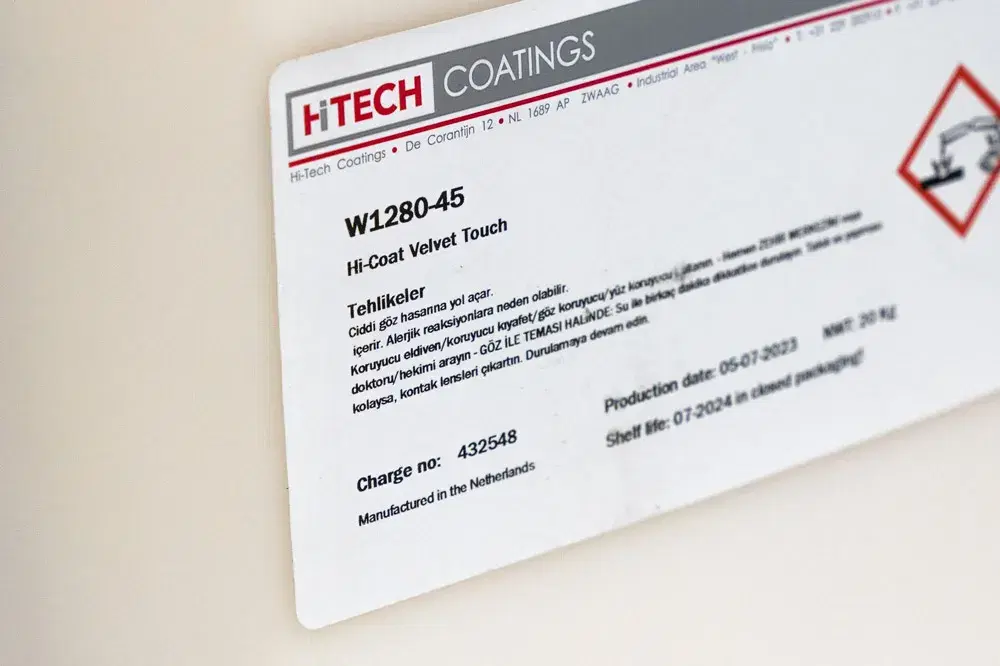
Switching to UV is not just a lamp and ink decision; blankets, rollers, washes and varnish must be UV-compatible too. Conventional NBR blankets and rollers swell in UV monomers and fail quickly; UV and hybrid printing need EPDM or UV-grade surfaces, and the UV-compatible option within VECTOR printing blankets is chosen from the press and ink data. Washes must be UV-compatible as well. On paper, coated surfaces give gloss and sharpness, absorbent papers adhere well but lose gloss, and plastics, PP, PE and metallised stock need a surface-energy check (dyn/cm) and corona or primer where required. For varnish, UV gives the highest gloss, while the water-based Hi-Tech Coatings dispersion varnish is a low-odour, recyclable alternative on hybrid presses with conventional units.
08Environment, safety and regulation
Mercury-vapour lamps generate ozone at short wavelengths and need extraction; LED lamps do not. Spent mercury lamps fall under hazardous-waste rules, and the Minamata Convention and national regulations keep increasing pressure on mercury-containing products; LED carries no such burden. LED saves energy because the lamp runs only while printing and produces little heat, which is also a selling point for packaging customers who report carbon footprints. Operator safety needs attention in both systems: uncured UV ink contains acrylates and can sensitise skin, so gloves, eye protection and the PPE rules in the SDS apply to both, and lamp shielding prevents direct UV exposure. UV inks remain subject to EuPIA guidance and low-migration requirements for food packaging under either technology; LED-UV simply makes the environmental statement easier on ozone, mercury and energy. See UV ink technology for the fundamentals.
| Topic | Conventional UV (mercury) | LED-UV |
|---|---|---|
| Ozone | Generated, extraction needed | None |
| Mercury and lamp disposal | Hazardous waste, growing regulatory pressure | No mercury, e-waste regime |
| Energy and heat | Runs continuously, high heat, cooling load | Instant on/off, low heat, clear savings |
| Operator safety | UV radiation, ozone, acrylate contact | UV radiation and acrylate contact; no ozone |
| Food packaging compliance | Low-migration series required | Low-migration LED series required; same obligation |
09The hybrid route: both on one press
The decision need not be either/or. Many printers migrate in stages: keeping the mercury end-of-press dryer while adding LED interdeck modules, or fitting LED only to the coating unit for fast curing of gloss varnish. Hybrid set-ups run dual-cure inks that cure under both mercury and LED lamps, so the workflow keeps one ink stock. Retrofit kits make LED-UV possible on older presses, but lamp intensity against press speed, power supply and blanket and roller compatibility must be checked first. A staged transition spreads the investment risk and lets operators learn the new ink-water and cure balance without disrupting current jobs, at the cost of maintaining two lamp systems for a while. Predominantly coated commercial work and short runs justify going straight to LED; heavy board and thick-film packaging is safer with a hybrid start.
10Conversion checklist
Have the curing unit's spectrum and power (mW/cm²) been measured? Does the ink series match that spectrum (LED, conventional or dual-cure)? Are blankets and rollers UV-compatible (EPDM)? Is the wash chemistry for UV? Has deep cure in opaque colours been tested (solvent and rub)? Has heat load been measured for heat-sensitive substrates? Are low-migration series and documents in place for food packaging jobs? Are operators trained in cure measurement and lamp maintenance? SIM's technical team runs curing tests at the press during conversion, recommends the right Zeller+Gmelin series and shares TDS/SDS and press settings, in English for export customers; for the whole material system see the printing materials guide.
Sources
Gallery
Frequently Asked Questions
- Does LED-UV ink cure under a conventional UV lamp?
- Most LED inks also cure under a broad-spectrum mercury lamp, but not the reverse: a conventional UV ink does not cure sufficiently in LED's narrow band. For both lamp types choose "dual-cure" (LED-ready) series; in every case verify the degree of cure with solvent and rub tests.
- Why is LED-UV ink more expensive?
- The dedicated photoinitiators that absorb strongly in LED's narrow band cost more, and the formulation carries extra components against yellowing and for surface cure. Per job, this difference is offset by energy, lamp, ventilation and stand-by savings; in plants with high energy cost and many short jobs LED is usually cheaper overall.
- Can LED-UV be added to an existing conventional press?
- Retrofit LED curing units can be added to most sheetfed presses; because the heat load is low, adaptation to existing presses is easier than with conventional UV. Conversion requires EPDM blankets and UV-compatible rollers, separate wash chemicals, LED-compatible ink and cure measurement; our technical team tests at the press.
Related Products
SIM Baskı Malzemeleri
Get a Custom Quote for Your Project
Contact us for information about our wide product range and custom color production.