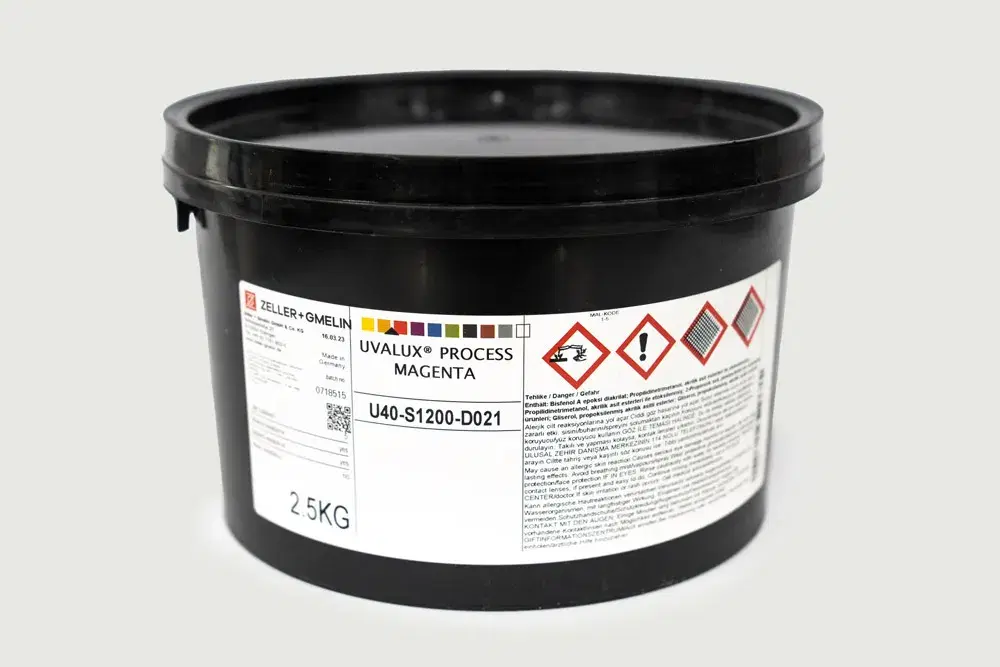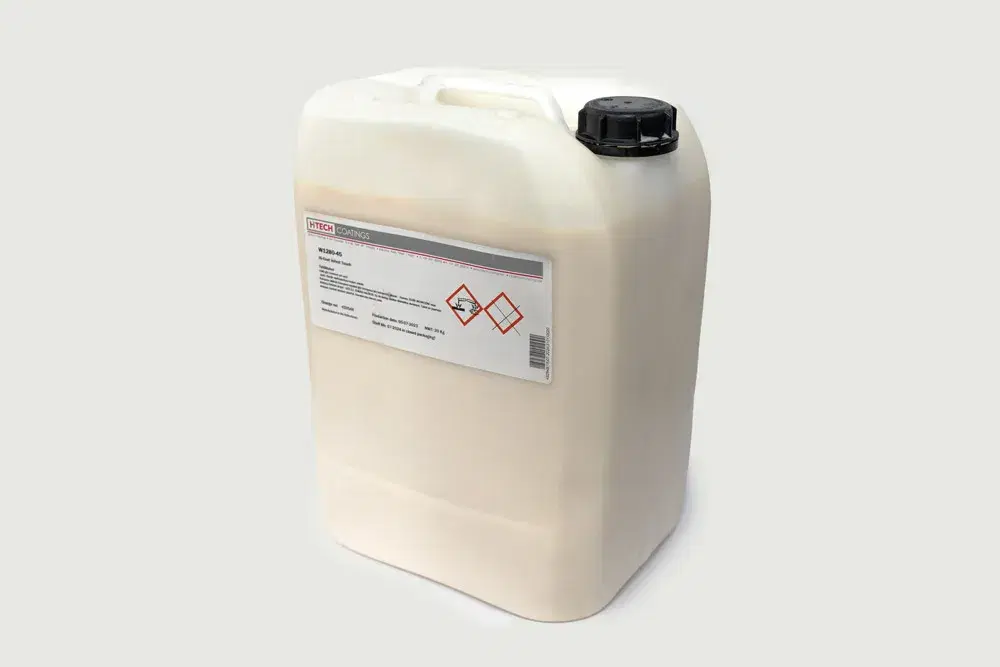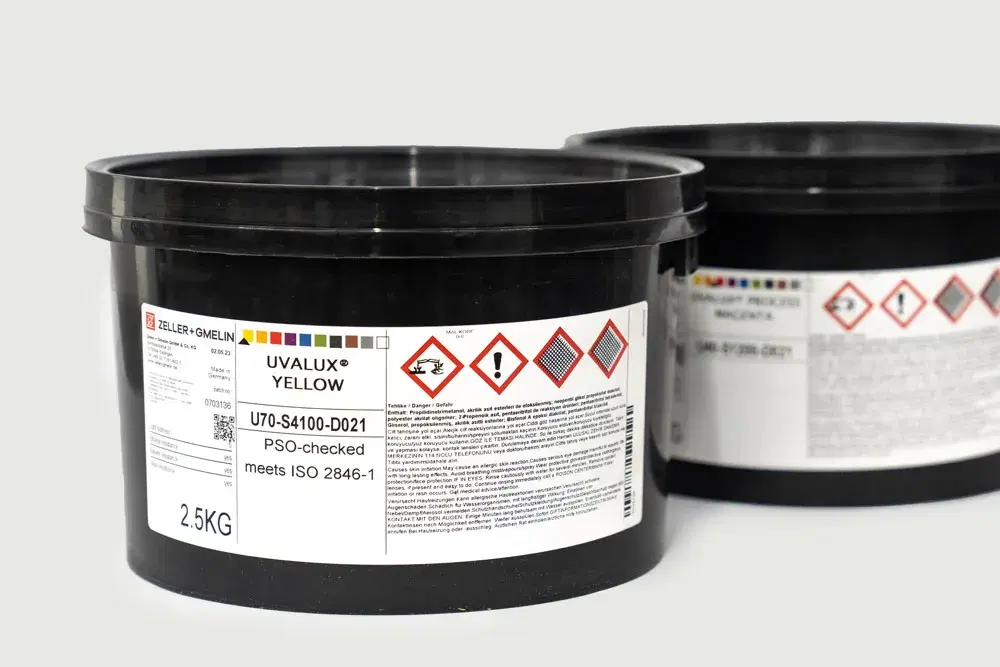
Flexography (flexo) is the most widely used printing technology for flexible packaging of food, cosmetics, and self-adhesive labels. Delivering high-quality and stable results at high speeds depends heavily on selecting the correct ink and controlling chemical parameters. Today, environmental regulations (EU PPWR) mandate reducing VOC emissions in flexo inks. This guide technical analyzes water-based, solvent-based, and UV flexo inks. For the offset counterparts see UV offset inks, our packaging ink selection article and the printing materials guide.
01Flexo Ink Types and Applications
Flexo inks are categorized into three types based on their carrier liquid base: 1. Water-Based Flexo Inks: Use water and alcohol mixtures as carriers. VOC emissions are extremely low (2-5%). Standard for corrugated board, cartons, paper bags, and food-contact paper packaging. 2. Solvent-Based Flexo Inks: Utilize alcohol and ester-based fast-evaporating solvents. Deliver excellent adhesion, high rub resistance, and brilliance on plastic films (PE, PP, PET). Ideal for high-speed printing of chips packets and flexible pouches. Require VOC abatement systems due to high emissions. 3. UV Flexo Inks: Solvent-free (100% solid content). Polymerize instantly under UV lamps. Excellent for high-resolution narrow-web label printing (shampoo, cosmetic labels) providing sharp dot quality and color saturation.
Anilox roller cell volume (BCM - Billion Cubic Microns) determines the amount of flexo ink transferred. High-screen aniloxes (low BCM) should be selected for fine details, while low-screen aniloxes (high BCM) are chosen for solid areas.
02The Importance of Viscosity Control
The stability of ink transfer in flexo printing depends entirely on viscosity, measured in seconds using standard cups (Zahn Cup, Ford Cup). High viscosity leads to dirty prints and poor transfer. Low viscosity weakens color strength and causes ink spitting on press. Since temperature increases lower viscosity, ink chamber temperature must be controlled, and evaporated solvent or water replenished with diluents.
03Frequently Asked Questions (FAQ)
How does the deinking process work for flexo inks? For plastic packaging recyclability under PPWR, inks must be deinking-conformant. Water-based flexo inks dissolve easily in recycling wash waters, ensuring clean plastic flakes. Special binders are developed for solvent inks to facilitate washing off during recycling.
Gallery
Frequently Asked Questions
- What types of flexo ink are there?
- Water-based (paper, corrugated board, paper bags), solvent-based (flexible plastic film, lamination) and UV/LED-UV (labels, narrow web). The choice depends on substrate, drying system and food-contact requirements; each type needs matching anilox and plate compatibility.
- How is viscosity controlled in flexo printing?
- It is measured in seconds with a Zahn or DIN cup (typically 18–25 s, DIN 4, for water-based inks); because temperature and solvent evaporation change viscosity continuously, an automatic viscosity controller or a manual check every 30 minutes is recommended. Rising viscosity reduces coverage and increases dot gain.
- How does anilox selection affect ink transfer?
- Cell volume (BCM) sets how much ink is transferred and screen count (LPI) the detail resolution; fine-screen work needs high LPI with low BCM, solids need low LPI with high BCM. A wrong anilox misses target density even when viscosity is correct.
Related Products
SIM Baskı Malzemeleri
Get a Custom Quote for Your Project
Contact us for information about our wide product range and custom color production.